

(Kitco News) – Chinese banks are running out of gold, while Russia’s commercial and sovereign reserves are rapidly being depleted as the two BRICS nations face sky-high domestic demand even as prices set new records.
According to local news agency Yicai, the app of Industrial and Commercial Bank of China shows 5, 20, 50, 100, and 200-gram gold bars are out of stock, with only the 10-gram option showing limited availability.
Agricultural Bank of China’s app also shows the lender is sold out of 10 and 20-gram gold bars, while the 100 and 200-gram bars are running low. Meanwhile, the China Construction Bank app shows that only the 50 and 100-gram investment gold bars are available, while the apps of Postal Savings Bank of China and Bank of China show all gold bars are in preorder status, meaning none are currently available.
“Even though gold prices may continue to rise in the short term, the related risks are also likely to gradually accumulate,” said Wu San, a researcher at the Bank of China Research Institute. “Investors need to consider different strategies, such as portfolio diversification, to effectively mitigate risks based on their individual situation.”
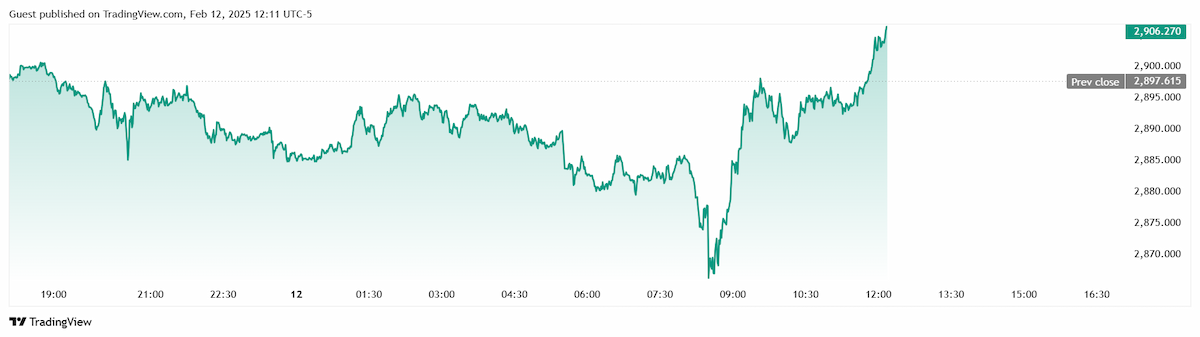
The shortages come as gold prices in China and around the world continue to set new all-time highs. Spot gold last traded at a fresh high of $2,906.44 per ounce for a gain of 0.30% on the day.
Fellow BRICS power Russia is also seeing dwindling gold stocks at both the central bank and commercial bank levels.
Gold reserves declined by 46.4 percent in 2024, representing a decrease of over 33 metric tonnes, according to a report from Russian news outlet RBC citing data from Russia's Central Bank.
The Central Bank said Russia's gold reserves declined 23.6 percent in monetary terms last year, but in physical terms, the drop was 46.4 percent, the biggest slump since the peak of the COVID pandemic in 2020.
RBC said that physical gold reserves held by Russian banks now stand at 38.1 tonnes worth $3.4 billion, or 325.4 billion rubles. Russia’s gold reserves are now at their lowest level since July 2022.
According to the World Gold Council, Russian consumers bought 75.6 tonnes of gold in 2024, a 6 percent increase from the previous year but 62 percent more than in 2021, the year before Russia invaded Ukraine.
