
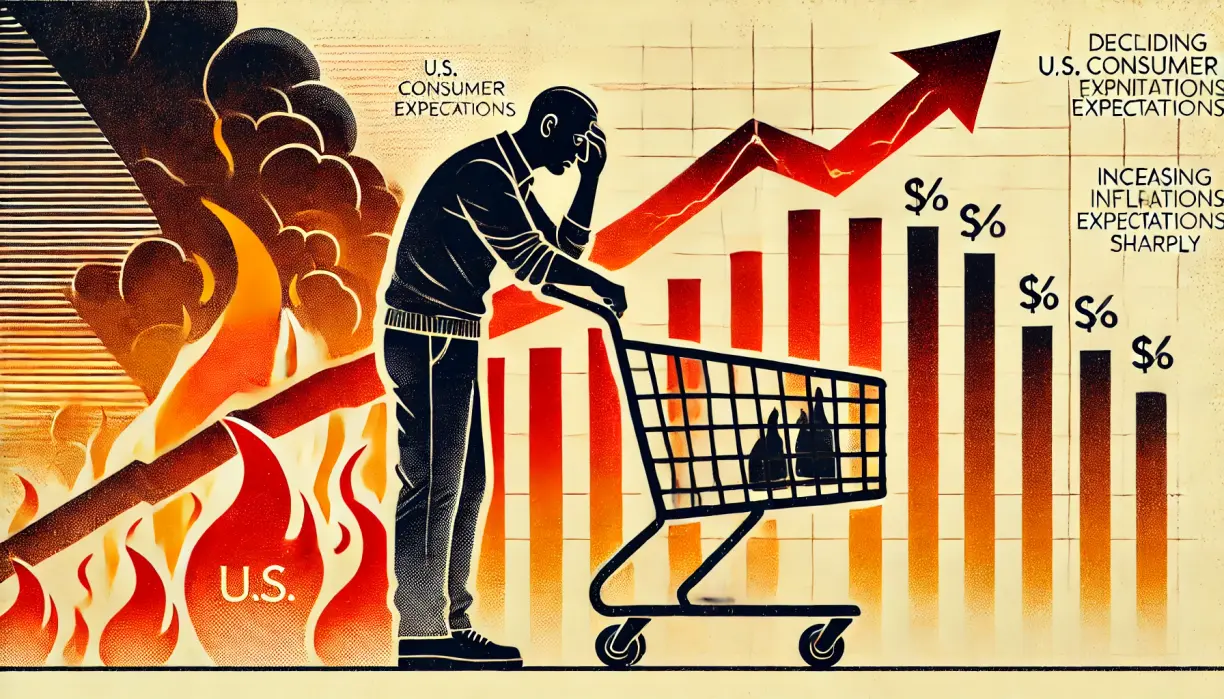
(Kitco News) - The gold market is trading lower ahead of the weekend after the latest data showed consumer sentiment in the U.S. deteriorating more than expected, while inflation expectations rose further once again.
The University of Michigan announced on Friday that the preliminary reading of its Consumer Sentiment survey was 50.8 in May, below April’s final reading of 52.2. The data was worse than expectations, as the consensus forecast of economists called for improvement to a 53.4 reading.
“Consumer sentiment was essentially unchanged this month, inching down a scant 1.4 index points following four consecutive months of steep declines,” said Surveys of Consumers Director Joanne Hsu. “Sentiment is now down almost 30% since January 2025. Slight increases in sentiment this month for independents were offset by a 7% decline among Republicans. While most index components were little changed, current assessments of personal finances sank nearly 10% on the basis of weakening incomes. Tariffs were spontaneously mentioned by nearly three-quarters of consumers, up from almost 60% in April; uncertainty over trade policy continues to dominate consumers’ thinking about the economy.”
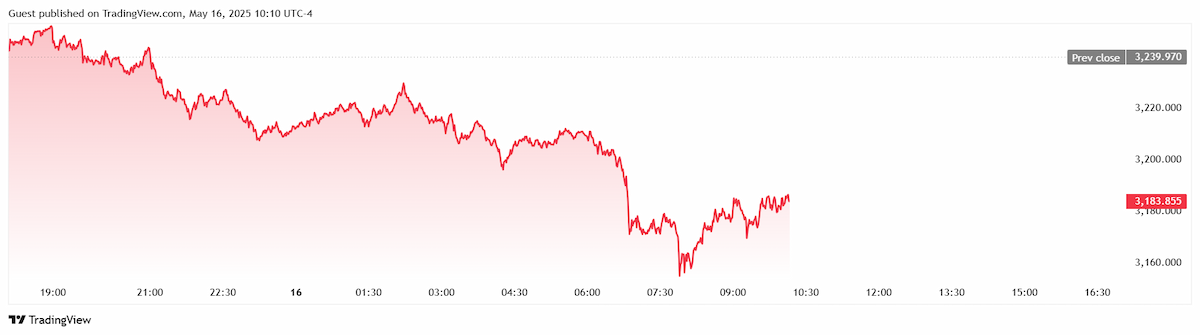
The gold market is holding steady near the lower edge of its daily range following the 10 am EDT data release, with spot gold last trading at $3,184.52 per ounce for a loss of 1.71% on the day.
The components of the index showed deepening concern about the potential for higher inflation.
“Year-ahead inflation expectations surged from 6.5% last month to 7.3% this month,” Hsu said in the report. “This month’s rise was seen among Democrats and Republicans alike. Long-run inflation expectations lifted from 4.4% in April to 4.6% in May, reflecting a particularly large monthly jump among Republicans. The final release for May will reveal the extent to which the May 12 pause on some China tariffs leads consumers to update their expectations.”
And the pause in tariffs did little to slow the decline in sentiment.
“[I]nterviews for this release were conducted between April 22 and May 13, closing two days after the announcement of a pause on some tariffs on imports from China,” Hsu said in the report. “Many survey measures showed some signs of improvement following the temporary reduction of China tariffs, but these initial upticks were too small to alter the overall picture – consumers continue to express somber views about the economy. The initial reaction so far echoes the very minor increase in sentiment seen after the April 9 partial pause on tariffs, despite which sentiment continued its downward trend.”
