
(Kitco News) - Not only are central banks expected to continue buying gold over the next 12 months, but the precious metal is also attracting significantly more attention from the official sector than at any other time in the past decade, according to the latest survey from the World Gold Council.
On Tuesday, the World Gold Council published its annual Central Bank Gold Survey, which received 73 responses this year—the highest participation rate since the survey began eight years ago.
“Roughly half of all global central banks participated in this year’s survey,” said Shaokai Fan, Global Head of Central Banks at the World Gold Council, in an interview with Kitco News. “The survey shows that central banks see the value in holding gold as a global reserve asset.”
“The increase in participation is not just a number; it is a powerful signal of engagement with gold among the central banking community. These responses add depth to our insights into and understanding of gold’s role within reserve management,” the WGC stated in its report.
According to the survey, 95% of respondents expect global gold reserves to increase over the next 12 months. Additionally, 43% of central bank reserve managers indicated they plan to increase their own official gold holdings this year, up from 29% in last year’s survey.
This bullish sentiment comes as central banks have purchased more than 3,000 tonnes of gold over the past three years, with analysts predicting they could add another 1,000 tonnes to their reserves this year.
Fan noted that the survey continues to show that demand is largely driven by emerging market central banks. He added that this trend is unsurprising, as developed market central banks typically have more diversified economies to support their currencies.
“The sentiment shows there is very strong interest in gold and that there is still room for central banks to increase their gold holdings,” Fan said.
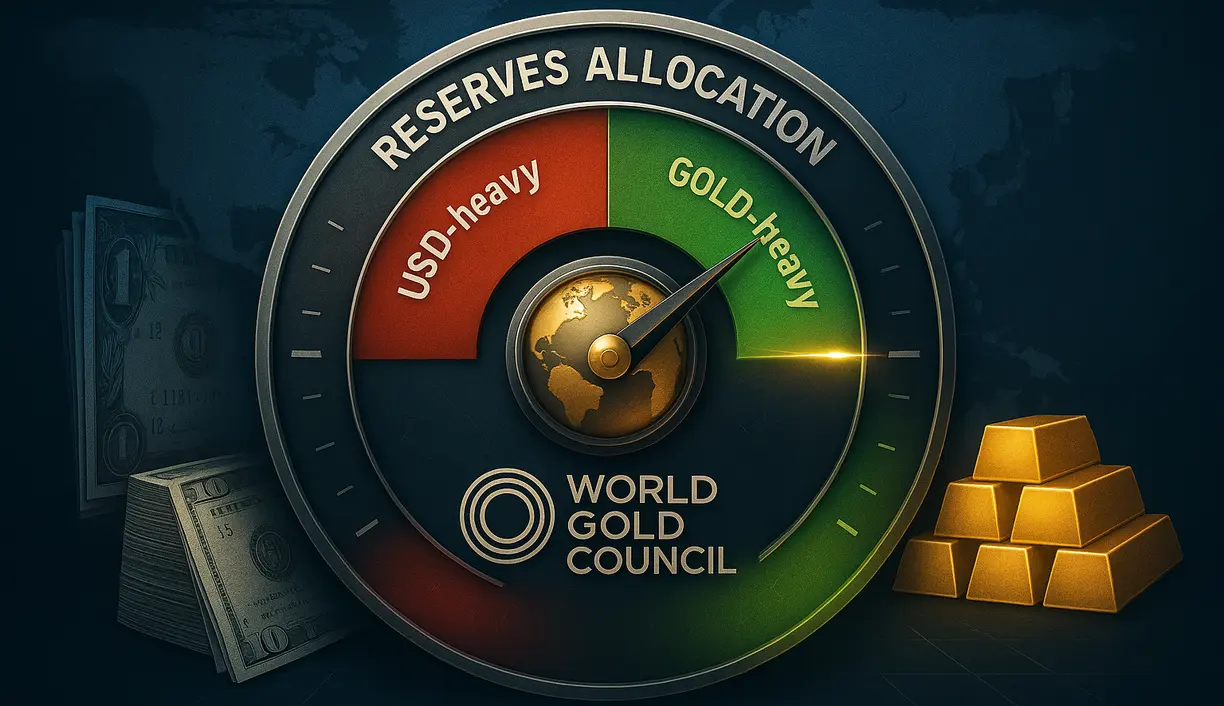
One of the most significant trends among emerging market central banks is the diversification away from the U.S. dollar. The survey indicates that while the U.S. dollar is expected to maintain its status as a reserve currency, central banks foresee a diminished role for it in the global marketplace.
Specifically, 73% of central bank reserve managers anticipate moderately or significantly lower U.S. dollar holdings within global reserves over the next five years. Meanwhile, 76% of respondents believe that gold will represent a moderately or significantly larger share of total reserves five years from now, up from 69% in last year’s survey.
Just last week, a report from the European Central Bank noted that gold had surpassed the euro to become the second-largest reserve asset held by central banks.
The survey also shed light on why central banks are holding gold.
According to the report, 85% of respondents indicated that gold’s performance during times of crisis is either highly or somewhat relevant to their organizations. Additionally, 81% highlighted gold’s role as a portfolio diversifier, while 80% emphasized its function as a store of value.
Compared to last year’s results, sentiment around gold holdings has seen a slight shift. In 2024, gold’s “performance during times of crisis” was more prominently rated as relevant, while its role as a “long-term store of value” was more strongly emphasized in the previous year’s survey.
“The consistency in the top three relevant factors shows that central banks across the board continue to recognize gold’s strategic role in risk management,” the WGC said. “Concerns over the inflation outlook and potential trade conflicts—particularly among EMDE (emerging market and developing economy) banks—demonstrate that diversification and risk mitigation remain key drivers of strategic reserve management decisions. And while there are differences between advanced economy and EMDE central banks on some aspects, they share a common confidence in gold’s role as a reliable store of wealth and a fundamental component of long-term reserve management strategies.”
