
(Kitco News) – The factors that affect the gold:silver price ratio have evolved over time, but both are being significantly impacted by more recent drivers, according to Erik Norland, Managing Director and Chief Economist at CME Group.
In an analysis published by CME on Tuesday, Norland pointed out that gold prices recently rose to a new record high above $3,500 per ounce before easing somewhat. “Silver prices have also been rising in tandem, peaking at above $37 per ounce but remaining well below its twin highs from 1980 and 2011,” he said. “Over time, the relative value of gold and silver as measured by their price ratio has varied amid supply growth, central bank buying, advances in technology (photography and solar panels) as well as the pace of Chinese growth.”

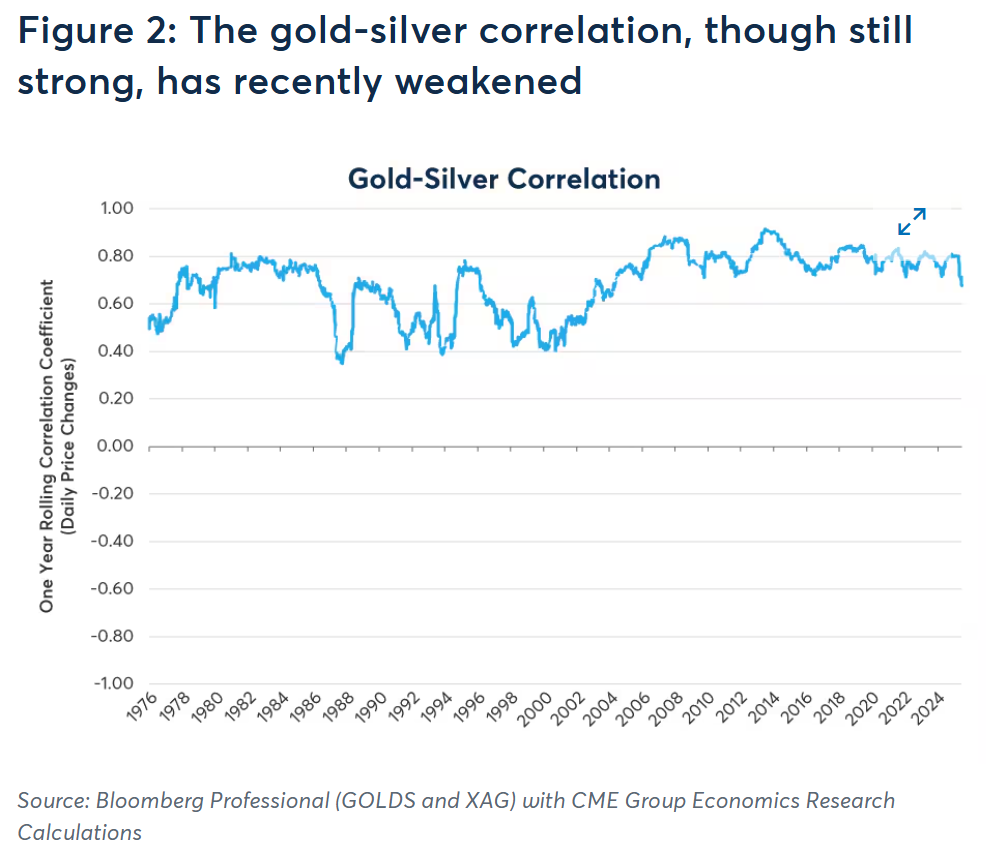
Norland noted that on a day-to-day basis, gold and silver prices are usually highly correlated, with a one-year rolling correlation coefficient ranging from 0.68 to 0.95.
“Currently, the two metals are experiencing their weakest price correlation in over two decades,” he said. “Moreover, even during periods of high correlation, the gold-silver ratio can move a great deal.”
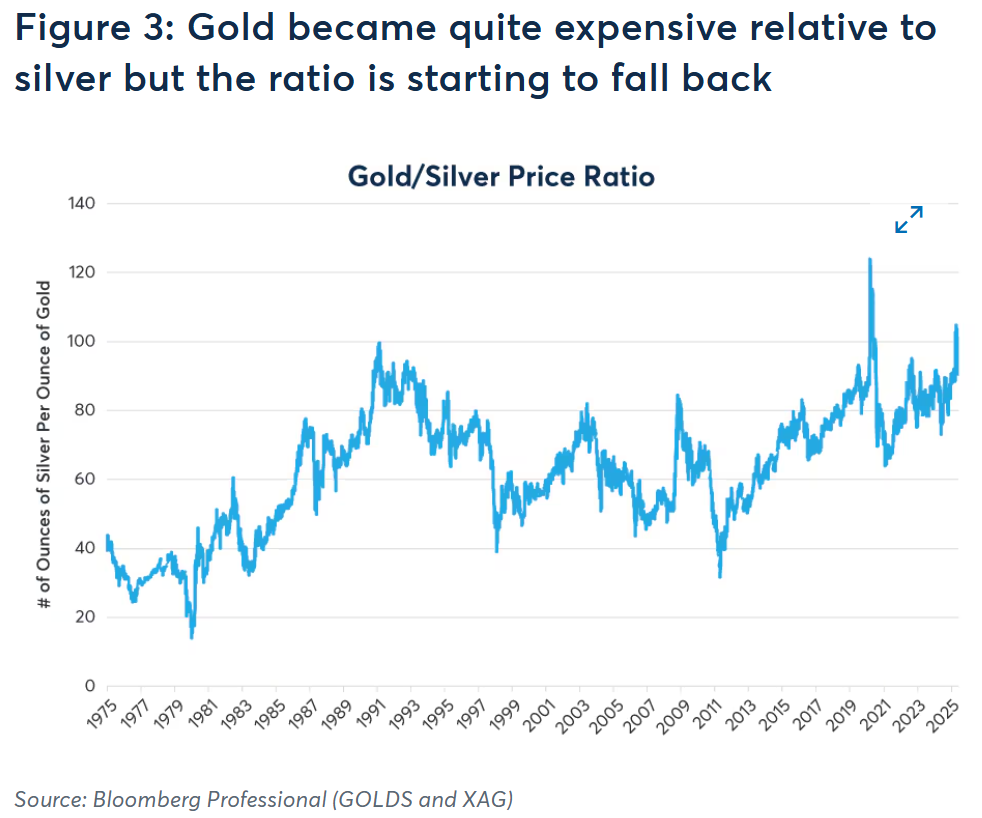
“During gold’s period of outperformance over silver, the gold-silver price ratio (the number of troy ounces of silver it takes to buy a troy ounce of gold) crossed over 100 for the first time since 2020 before falling back towards 90 in June,” Norland wrote. “During the period from 1997 to 2011, one ounce of gold typically bought anywhere from 25 to 83 ounces of silver, so its current trading level of around 90x as expensive as silver is still far from what was once historical norms.”
From a supply perspective, Norland said that gold’s outperformance relative to silver could appear mysterious.
In recent years, gold mining supply has been around 97 million troy ounces, whereas silver mining output has been around 800 million,” he said. “Mining production of both gold and silver peaked in the mid-2010s, fell in the late 2010s and then stabilized. Secondary supply (recycled metal) has been rising but secondary supply tends to respond to price changes rather than drive them.”


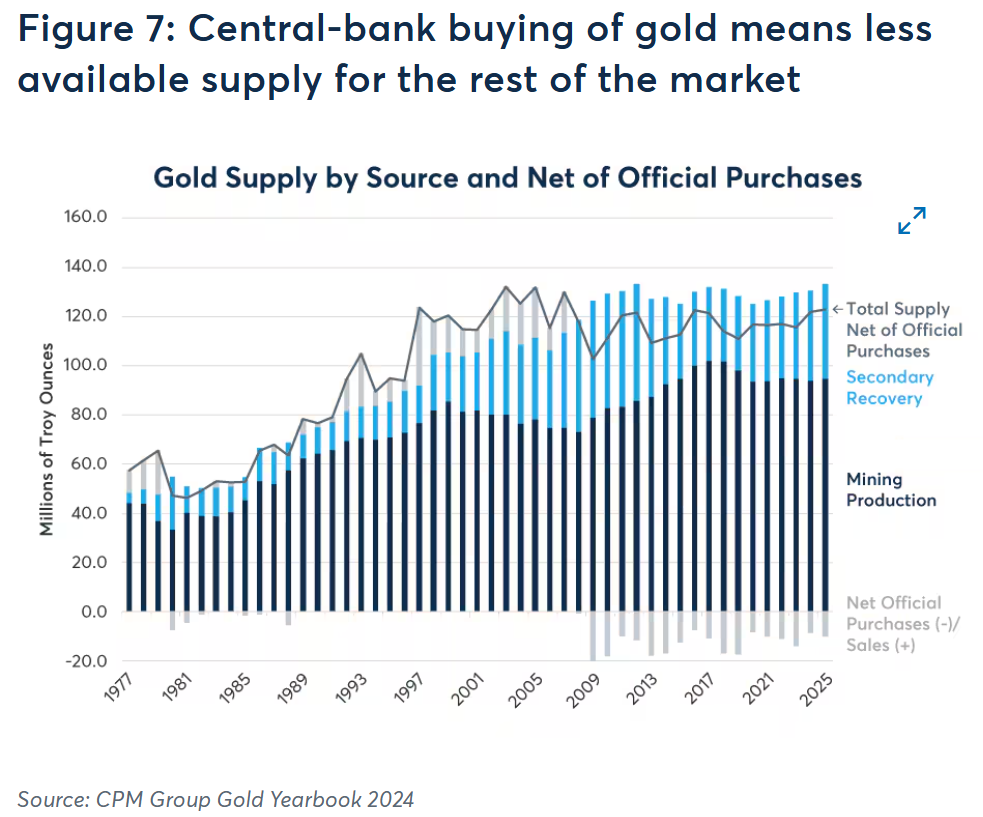
Gold, however, enjoys an advantage that silver doesn’t have. “Central banks have been net buyers of gold since 2008 after having been net sellers previously,” Norland said. “Central bank buying removes gold from the market permanently or at least until the central banks choose to reduce their holding, which they haven’t done since 2007.”

“Net of official central bank transactions, gold supply is lower today than it was in 2005,” he noted, “while silver supply is up by over 35%.”
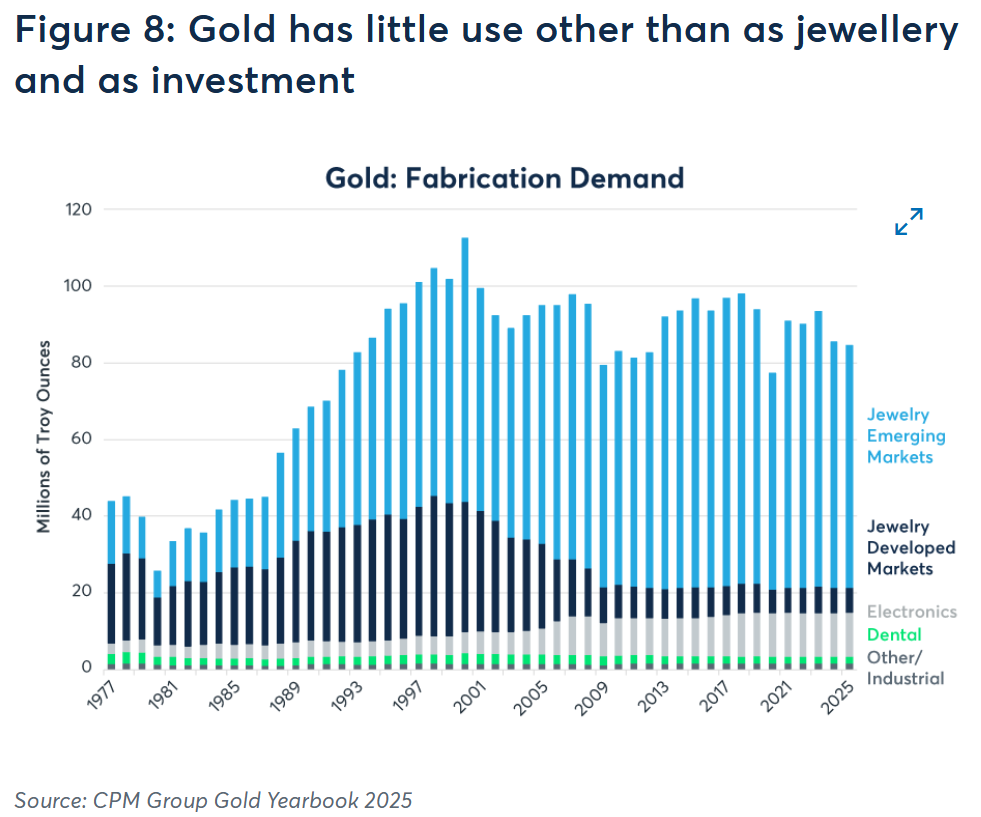
On the demand side, Norland pointed out that gold and silver are connected through the jewelry market. “Unlike silver, however, gold has very few industrial uses,” he said.
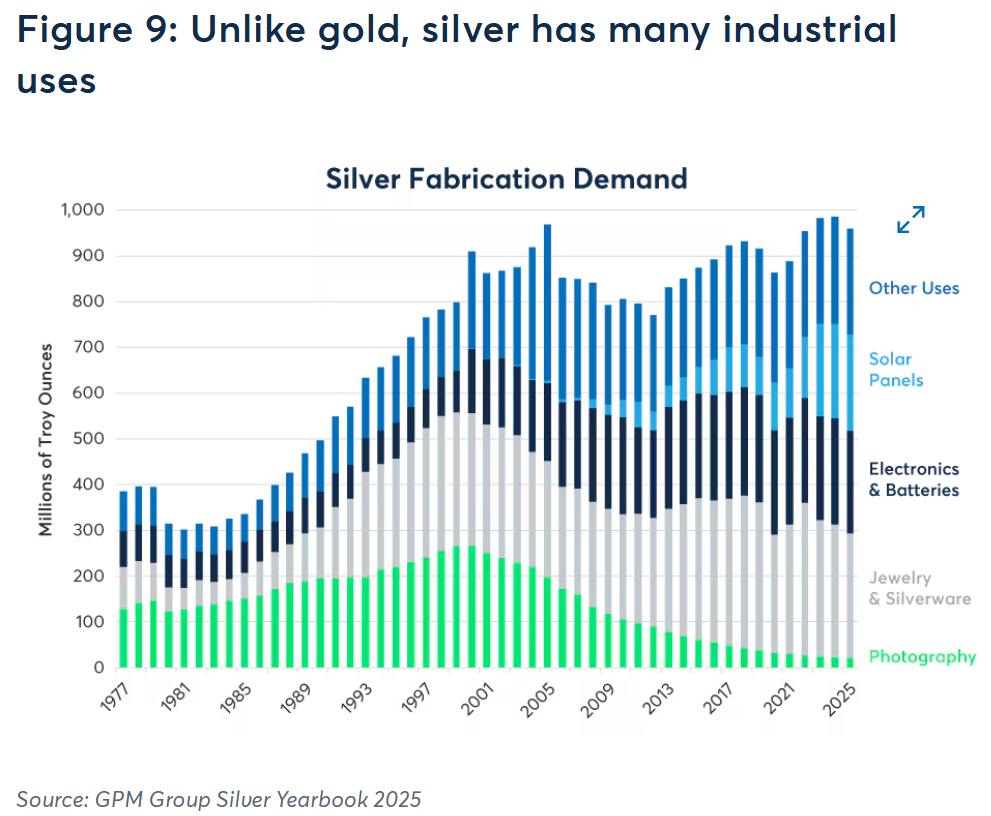
Silver, on the other hand, has many industrial uses. “A quarter century ago, the biggest of these applications was photography, but that dwindled from 25% of annual silver mining output to less than 4%, explaining, in part, silver’s underperformance relative to gold,” he said. “On the positive side, silver is finding increased applications in batteries and solar panels. That said, most silver is used for other industrial purposes, and this leaves silver at the mercy of the strength of global industrial demand.”
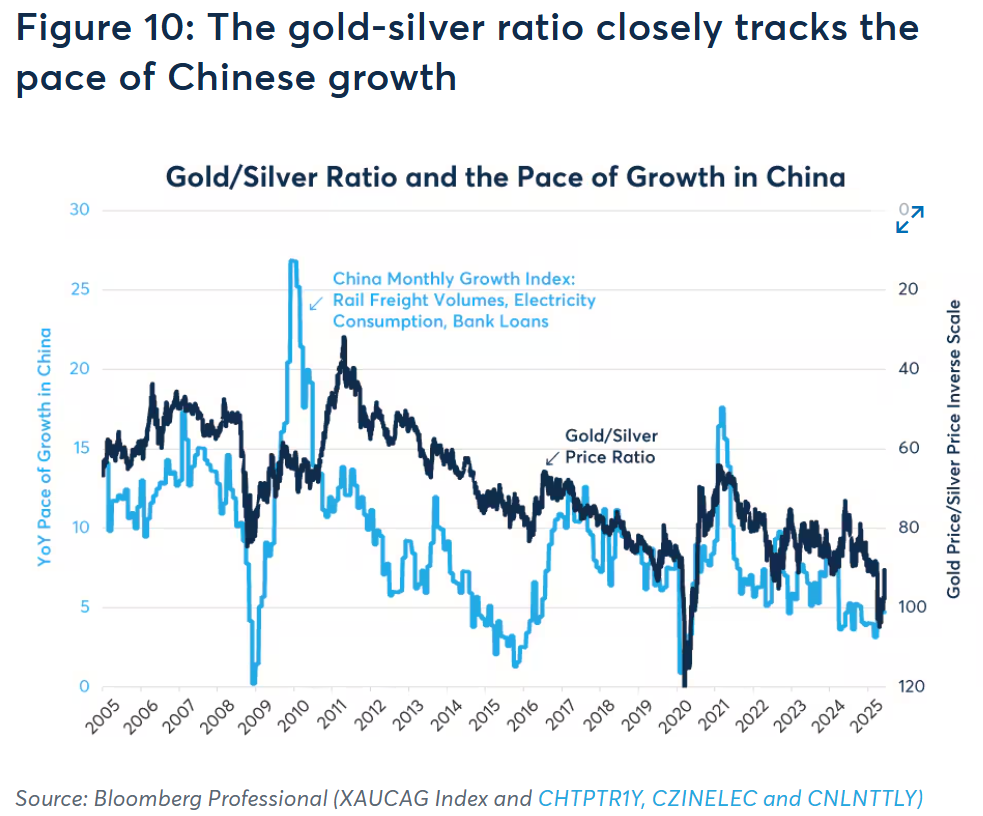
The gold:silver ratio is also very closely correlated with the growth rate of China, and it tends to follow Chinese industrial demand trends.
The bottom line, Norland wrote, is that central bank gold purchases have contributed to the yellow metal’s outperformance relative to silver, while the decline of photography over time has hurt silver prices. “Growth in solar panel manufacturing may provide support for silver,” he added.
