
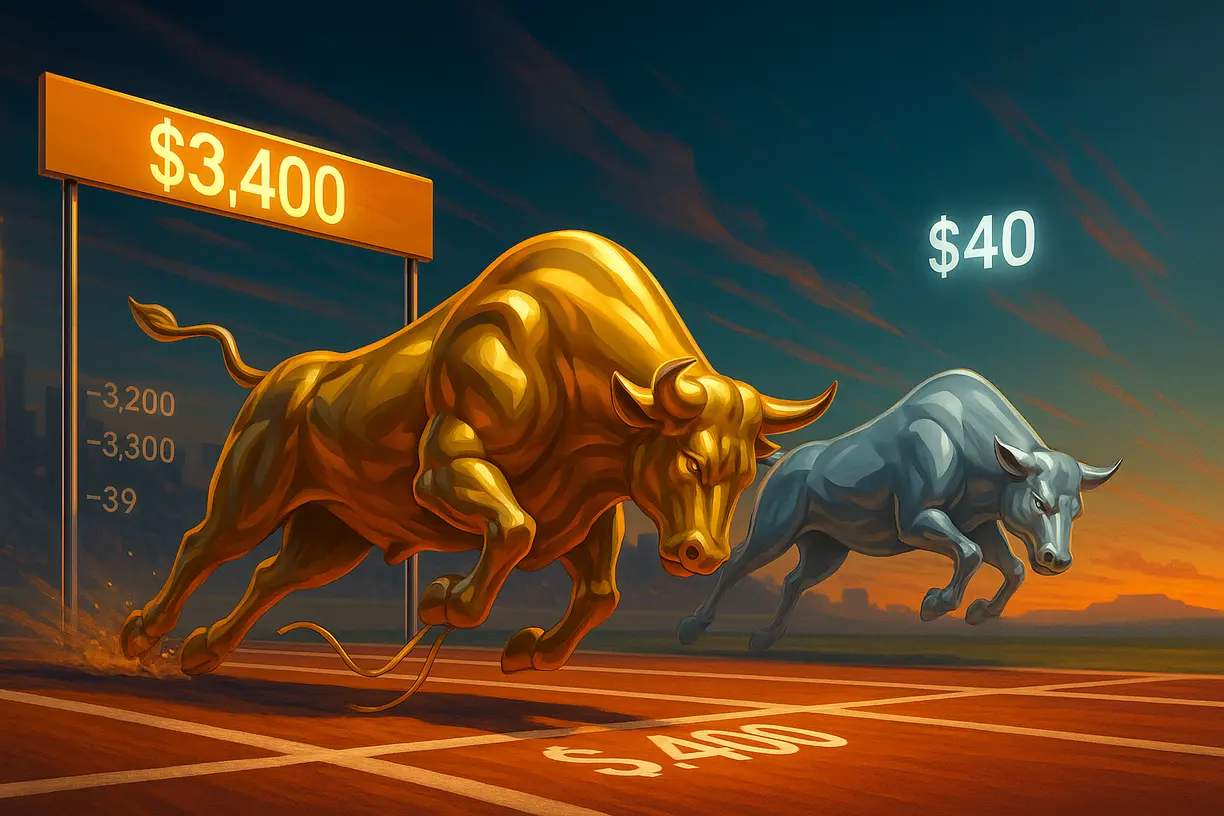
(Kitco News) - Gold and silver bulls were riding high—until another rally collapsed at the last hurdle. For the fourth time, gold made another mad dash for the $3,400 finish line—only to trip over its own shoelaces once again.
Meanwhile, silver had its best chance to touch $40 an ounce in 14 years, but the rally also didn’t have enough fuel to cross the finish line.
This is definitely a familiar story for precious metals investors, and while trading the market can be frustrating, it shouldn’t be surprising. Gold more than silver is driven primarily by investment sentiment, and in this fickle marketplace, sentiment can turn on a dime.
The selling pressure in gold started after news broke that the Trump Administration and the Japanese government were close to a trade deal, which would see Japanese imports tariffed at 15%.
There is also speculation that this negotiation could set the groundwork for a deal with the European Union. Friday, President Donald Trump said there is a 50/50 chance America will make a deal with Europe.
Uncertainty surrounding Trump’s ongoing trade war has been the biggest factor behind investment safe-haven demand for gold, so any potential clarity will impact this demand.
At the same time, gold’s rally is also working against itself as many analysts note: “Higher prices cure higher prices.”
Ahead of the weekend, the China Gold Association (CGA) reported that consumption fell 3.54% in the first half of this year. Because of higher prices, consumers are buying less physical gold, including jewelry. However, investment demand remains healthy, as the value of Chinese gold ETFs increased by $8.8 billion during the first six months of the year, according to a report from the World Gold Council.
There is a consistent theme growing among commodity analysts who expect that higher prices will continue to impact physical demand; however, economic uncertainty will continue to support investment demand, which has the potential to drive prices back to record highs by the end of the year.
While the U.S. government continues to make trade deals left and right, the question nobody is answering is how and who will pay these taxes.
This week General Motors reported that Donald Trump’s tariff policies resulted in a 35% decline in profits in the second quarter. Either corporations will have to eat the increased costs—which will impact earnings—or they will pass these prices on to consumers.
The threat of stagflation—lower growth and higher inflation—remains a real threat for the U.S. economy, and this is the perfect environment for gold.
Higher inflation and lower interest rates mean U.S. real yields are expected to fall before the end of the year, making U.S. Treasuries less attractive. Meanwhile, gold shines brightly in a low-real-yield environment and becomes an attractive portfolio diversifier because of lower opportunity costs as a nonyielding asset.
Yes, gold and silver’s failed breakout is frustrating, but don’t miss the forest for the trees.
Have a great weekend.
