
(Kitco News) – Political interference with the Fed and the prospect of rates dropping too low to restrain inflation will be bad for the dollar but good for gold, while silver’s new U.S. designation as a critical mineral should boost demand even as the solar buildout slows, according to precious metals analysts at Heraeus.
In their latest precious metals update, the analysts wrote that the Trump administration is disrupting the Federal Reserve.
“Trump has sacked Fed governor Lisa Cook, who is taking legal action to defend her position, regarding incorrect mortgage filings that were revealed by the housing finance regulator,” they said. “Fed governors can be removed by the President under certain circumstances ‘for cause’, a term which has not been clearly defined. This will likely be decided in the courts, which could take months. Further interference in a supposedly independent Fed could ultimately lead to higher inflation if, for political reasons, interest rates are kept lower than the economy might need. That could be good for the gold price in the longer term.”
The analysts noted that gold has moved higher once again, but it remains to be seen if it can truly break out. “The 2-year bond yield has been sliding lower,” they said. “The gap between the 2-year yield at 3.65% and the lower bound of the Fed’s rate range at 4.25% is 0.6 ppt, which is wide enough that the Fed should cut rates in September. Following the President’s intervention, the market-based probability of a 25 bp rate cut has moved up to 87.8%, although it was higher than that earlier in August.”
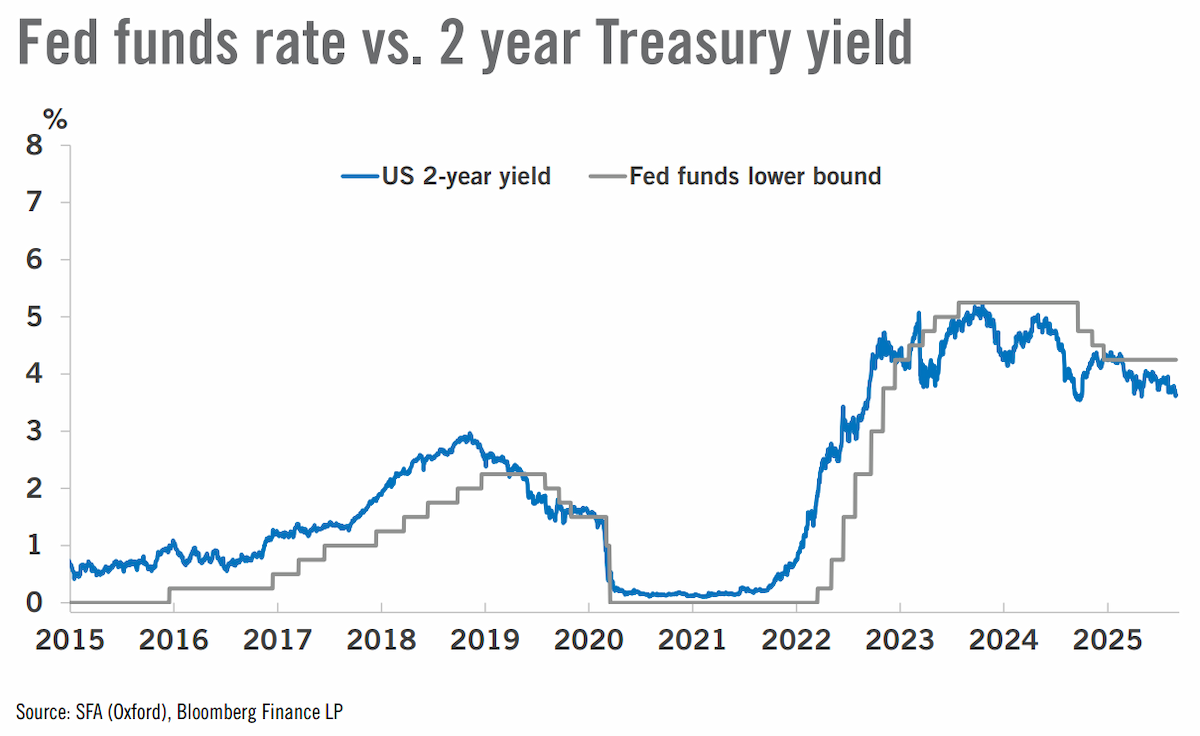
“Another weak jobs number for August might be enough cover for a cut without it appearing that the Fed caved in to outside pressure,” they added.
Spot gold is continuing to challenge the $3,500 level after setting a fresh all-time high of $3,508.79 per ounce just before 10 pm EDT on Monday evening. Spot gold last traded at $3,497.80 per ounce for a gain of 0.62% on the session.

Turning to silver, Heraeus said the U.S. government’s updated list of critical minerals now includes silver.
“The United States Geological Survey (USGS) assessment reflects a significant advancement in how the US evaluates mineral criticality using advanced methodology based on economic importance, supply chain vulnerabilities, and projected demand growth,” the analysts said. “With domestic output covering only around 30% of consumption, the US remains heavily dependent on imports from Mexico, Canada, and Peru, highlighting potential geographical risks as silver demand continues to rise.”
“The US utility-scale solar industry is on track for record capacity growth in 2025 despite waning US policy support for renewables, especially wind and solar, as developers rush to advance projects before subsidy reductions take effect,” they wrote. “Roughly 12 GW of new utility-scale capacity was added in the first half of the year, with an additional 21 GW anticipated in the second half (source: Energy Information Administration). This would bring total additions in 2025 to 32.5 GW – an 8% increase over 2024’s 30 GW.”
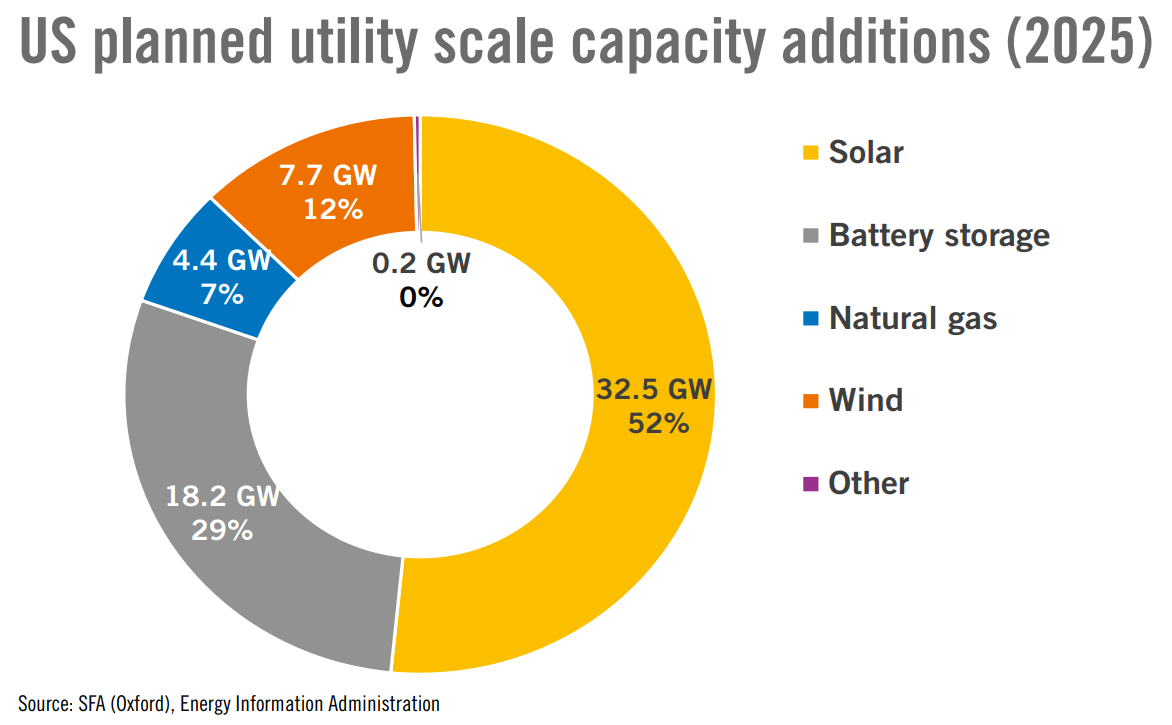
The analysts noted that solar is projected to account for over 50% of all new utility-scale power capacity additions in 2025, but construction must begin by mid-2026 to qualify for the full federal solar tax credit.
“While that is good news for silver demand from photovoltaics, given the changes in the regulations in China that could limit installations in the much larger market, overall global solar demand could be flat or lower this year than the 198 moz reached in 2024,” they warned.
Silver prices have followed gold higher to start the week and are holding above the $40 per ounce threshold on Tuesday morning.

At the time of writing, spot silver last traded at $40.593 per ounce and is down 0.32% on the daily chart.
