
(Kitco News) - The gold market is trading higher ahead of the weekend after the latest data showed consumer sentiment in the U.S. declining more than expected, while inflation expectations rose higher once again.
The University of Michigan announced on Friday that the preliminary reading of its Consumer Sentiment survey for August was 55.4. The data was well below expectations, as the consensus forecast of economists called for a reading of 58, and was also lower than August’s final reading of 58.2.
“Consumer sentiment moved down less than three index points in early September,” said Surveys of Consumers Director Joanne Hsu. “This month’s easing in economic views was particularly strong among lower and middle income consumers.”
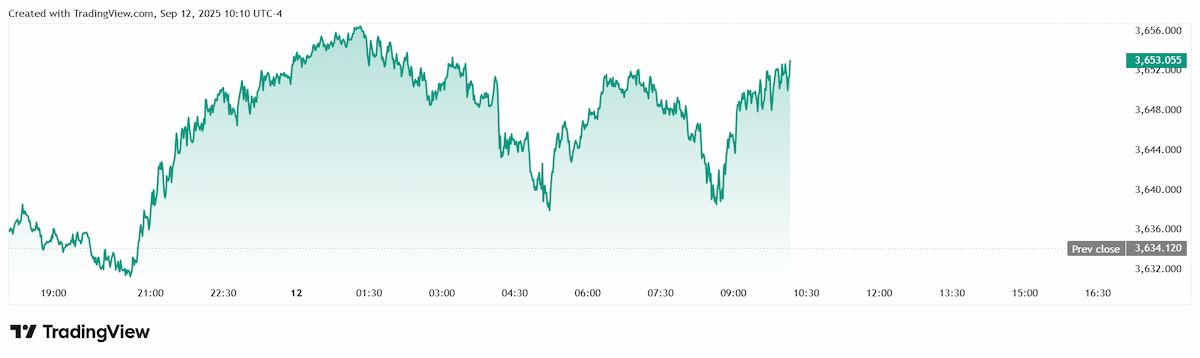
Gold prices traded higher following the 10 am EDT data release, with spot gold last trading at $3,653.13 per ounce for a gain of 0.52% on the day.
The components of the September index showed declines in most areas, with longer-run inflation expectations rising and most areas of consumer spending reflecting the impact of high prices.
“Buying conditions for durables improved, while all other index components fell,” Hsu noted. “Consumers continue to note multiple vulnerabilities in the economy, with rising risks to business conditions, labor markets, and inflation. Likewise, consumers perceive risks to their pocketbooks as well; current and expected personal finances both eased about 8% this month.”
The report said that trade policy remains “highly salient” to consumers, with about 60% “providing unprompted comments about tariffs during interviews,” a similar number as in August. “Still, sentiment remains above April and May 2025 readings, immediately after the initial announcement of reciprocal tariffs.”
The inflation picture continued to deteriorate, with year-ahead inflation expectations holding steady at 4.8% while long-run inflation expectations moved up for the second straight month to 3.9% in September. “This current reading is considerably lower than the 4.4% seen in April,” Hsu said.
Bill Adams, Chief Economist for Comerica Bank, told Kitco News that the report shows U.S. consumers are becoming even more pessimistic about the economy.
"Tariff agita, grocery bills, the job market, and political turbulence are weighing on consumer attitudes," he said. "Most Americans are taking little comfort from the ebullient stock market. There’s still some time until the start of the holiday spending season, but the setup looks disappointing for consumer-facing businesses as of today."
Adams said the Fed is being pulled in opposite directions by rising inflation on the one hand and a weak job market on the other.
"Chair Powell signaled at his speech to the Jackson Hole monetary policy conference that he favored ‘careful’ adjustments of interest rates given those competing pressures," he said. "The job market picture looks worse since he spoke, after the weaker-than-expected August jobs report, the downward revisions in the Preliminary Benchmark Revision, and a spike in jobless claims over the week of Labor Day."
On the other hand, the economy will get a shot in the arm from fiscal stimulus after the turn of the year," he added. "And the ebullient stock market thinks the outlook for corporate profits is much brighter than implied by glum consumer sentiment."
Financial markets are pricing in a rate cut at the Fed’s decision next Wednesday, but modestly reined in the likelihood of an outsize half-percent cut this morning after the consumer survey showed inflation expectations rose.
Adams said Comerica forecasts a 25-basis-point cut at Wednesday’s Fed decision.
"The Fed can be expected to cut rates further in coming months; the question is how much, not if," he said. "If Powell reiterates the ‘proceed carefully’ language he used at Jackson Hole in the post-meeting press conference, it will signal that he favors a pause in rate cuts at the October decision (barring further deterioration in the economic data)."
"It will be worth watching for a gap between the FOMC statement’s guidance, which represents the consensus view of all FOMC members, and Chair Powell’s own statements in the press conference, which reflect his personal view."
