
(Kitco News) - While the velocity of gold’s rally has taken some analysts by surprise, with the market posting its best year-to-date gains since 1979, its trajectory has never been in doubt, according to one fund manager.
In a recent interview with Kitco News, David Miller, CIO and Co-Founder of Catalyst Funds and Portfolio Manager of the Strategy Shares Gold Enhanced Yield ETF (GOLY), said that even with gold prices up more than 40% this year, the precious metal still offers investors plenty of value, as it is the only asset able to maintain its purchasing power.
“It’s not about what happens next week or next year but what is going to happen in the next 10 years,” he said. “Holding your wealth in any fiat currency is a pretty crummy way to preserve your wealth and purchasing power.”
The comments come as gold prices continue to trade near record highs on their way to $4,000 an ounce. Spot gold last traded at $3,888 an ounce, up 0.60% on the day.
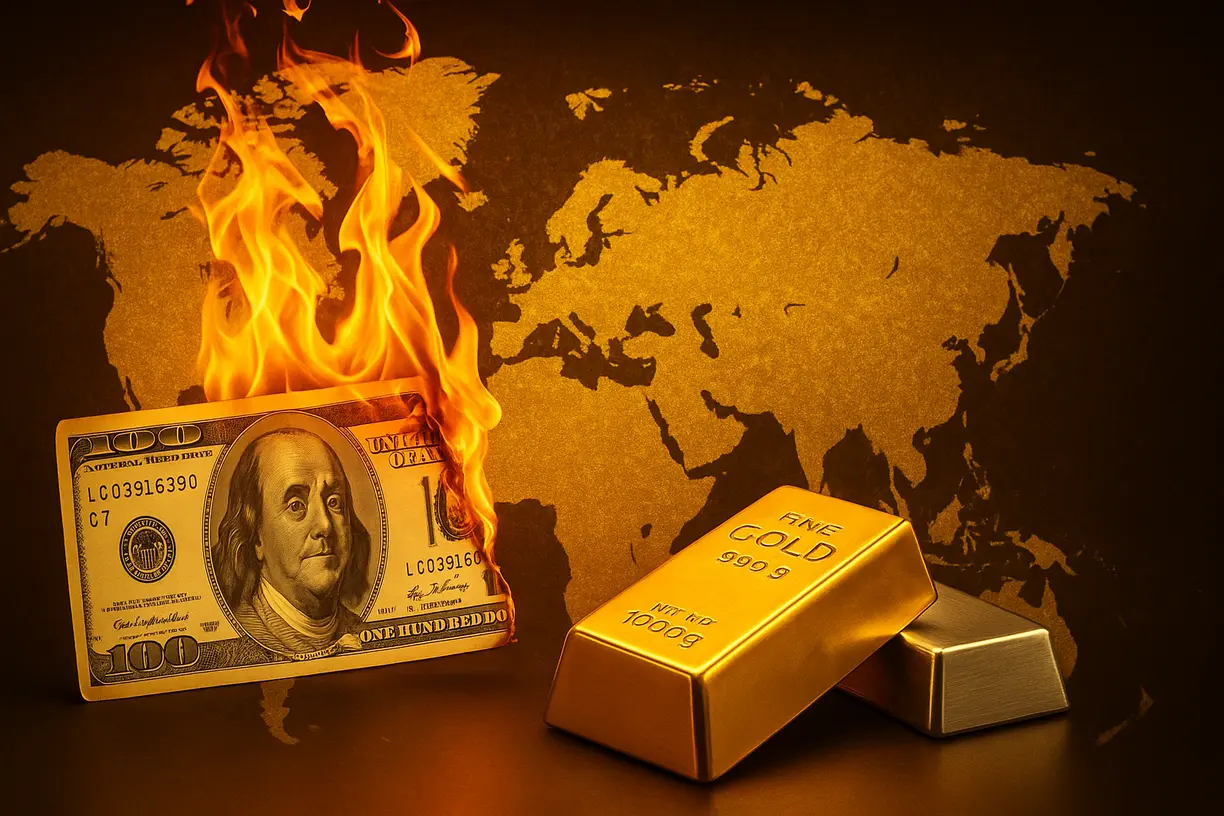
While inflation has always eroded a currency’s purchasing power, Miller noted that the global debasement trend has been in overdrive since the COVID-19 pandemic, as governments flooded the global economy with money and liquidity.
Although the official global health crisis ended in 2023, nations have continued to print money and expand already unsustainable debt levels. While gold has hit record highs against most major currencies, it has seen its biggest gains against the U.S. dollar.

“Gold is not overpriced as it is just keeping up with how fast the money supply has grown,” he said.
Miller added that investors should not be surprised by gold’s rally as the deficit has grown by $1.9 trillion this year, adding to the already massive $37 trillion debt load.
“If you owed $36 trillion, like the U.S. government does, and were running a $1.9 trillion annual deficit—spending that much more than you bring in through taxes—and also had a printing press, you’d likely use it. Politicians face major pushback for austerity or aggressive tax hikes, so the easiest path is to gradually debase the currency. It’s not just the U.S.—governments globally have learned this,” he said. “If deficit spending continues without true debt servicing, the dollar could be devalued by about 5% annually. One way to protect against this as a consumer or investor is to denominate your assets in hard currency—like gold—instead of the dollar, euro, or yen.”
Along with rising debt, another factor has been the weaponization of the U.S. dollar after Russia invaded Ukraine. Faith in the U.S. dollar has eroded further in the last six months due to President Trump’s ongoing trade war and global tariffs.
“ When you combine that trifecta of tariffs, weaponization of SWIFT, and enormous quantitative easing, no one in their right mind should want to keep their reserve, the money they don't intend to spend in dollars,” he said.
In this environment, Miller said central banks will continue to diversify away from the U.S. dollar and back into gold.
“Replacing U.S. dollar reserves with gold won’t happen overnight. This will be a multi-decade process, which will keep an elevated floor in gold for the foreseeable future,” he said.
