
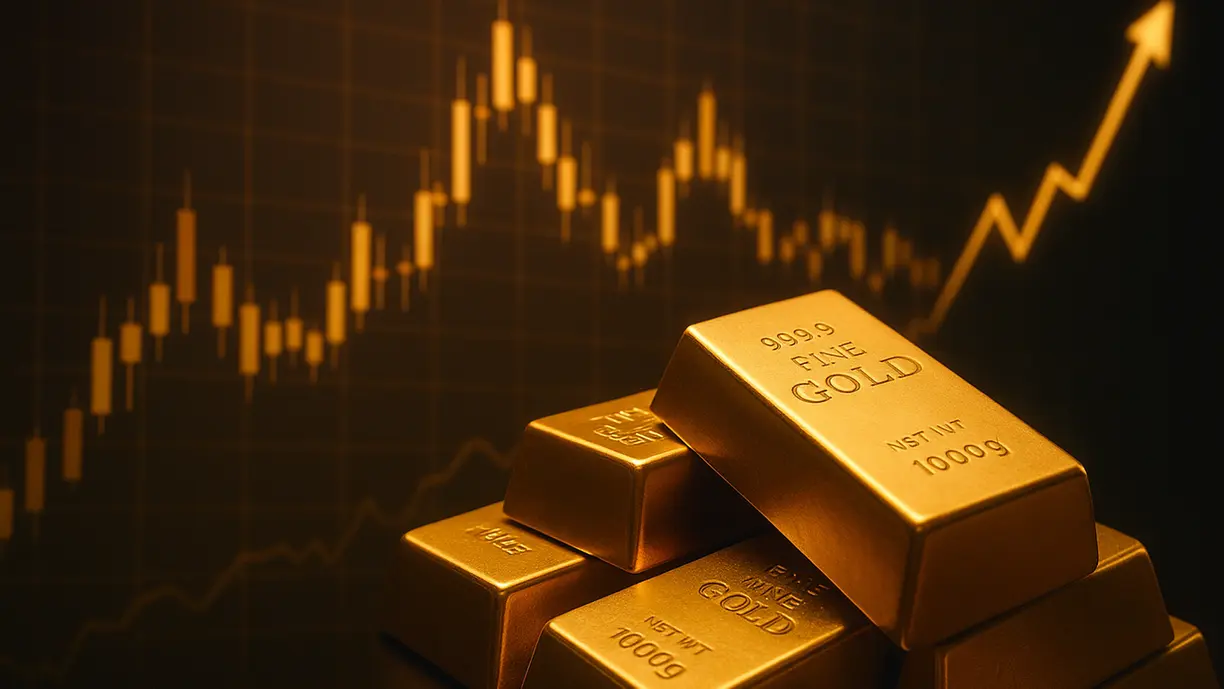
(Kitco News) – Gold has surged above $4,000 per ounce to become one of the best-performing major assets in 2025, but while the rally shows a loss of confidence in the U.S. dollar, many investors are also uneasy about the yellow metal at these elevated levels, according to analysts at Invesco.
“Hedge fund titans Ray Dalio and Ken Griffin have both pointed to the erosion of confidence in the dollar as a key driver, with Dalio framing gold as a superior safe haven in times of monetary debasement, while Griffin warns that the metal’s ascent signals growing anxiety over the greenback’s long-term role in the global system,” wrote Invesco strategists David Chao, Thomas Wu, Arnab Das, James Anania. “How right are they?”
They acknowledge that gold’s price moves have traditionally served as a signal of macroeconomic and geopolitical risks. “That dynamic appears alive today,” they said. “The gold surge is not only a reflection of its strong performance but may also be a warning light flashing against the backdrop of US policy turbulence. With the White House pursuing unconventional reforms, growth momentum slowing, and the administration openly challenging the independence of the Federal Reserve and other institutions, investors may be right to read gold’s ascent as a barometer of rising systemic risk.”
The strategists argue that gold’s rapid rise is particularly striking in the absence of a weakening USD and falling long yields. “The USD against a basket of currencies as represented by the US Dollar Index (DXY) has been moving sideways since mid-year,” they noted, “as has the 30-year U.S. Treasury (UST) yield.”
“A major driver of demand has been from central banks accumulating gold as a form of official reserves,” they said. “Counting gold shows the reserve shift is not from USD into EUR or RMB, but from fiat currencies into gold. In fact, gold has overtaken the EUR in reserves.”
“In our view, it’s possible that central banks may be buying gold because they see no fiat alternative to the dollar.”

The Invesco strategists also noted that much of the gold rally has also happened without a major push from ETFs.
“Despite double-digit gold returns in both 2023 and 2024, investor participation through ETFs remained muted, with holdings actually declining over that period,” they wrote. “In contrast, the strong performance so far in 2025 appears to be drawing investors back into the market, with ETF inflows finally turning positive. If sustained, this renewed participation could act as a powerful tailwind to gold prices.”

“We think the gold rally has legs even from record highs, even though it has broken from normal valuation drivers – the dollar, real rates – and looks expensive,” they said. “We see no true alternative to gold as a hedge against US risks and expect central banks to keep buying gold.”
The strategists caution, however, that contrary to common perception, gold has not performed consistently well as a hedge against inflation. “Historical data show that when inflation has remained below roughly 6%, equities have typically delivered stronger real returns,” they said. “Gold’s relative outperformance has been concentrated in episodes of elevated or extreme inflation, which are comparatively rare.”
“Given that the precious metal has not historically provided the real return potential of stocks (or downside risk mitigation of bonds), investors should be mindful to size any allocation appropriately.”

Gold has been in sharp decline through the Asian and European sessions, but spot is seeing a bounce after bottoming at $4,080.58 at 10:45 am Eastern.

Spot gold last traded at $4,126.44 for a loss of 5.27% on the daily chart.
