
(Kitco News) - Growing economic uncertainty has been a key driver of renewed investment demand for gold. While easing fears have prompted some selling pressure in the precious metal, new data highlight renewed risks for American consumers.
Easing trade tensions between the U.S. and China, along with a relatively calm third-quarter earnings season, continue to support equity markets at record highs and the S&P 500’s push toward 7,000 points. However, the LegalShield Consumer Stress Legal Index (CSLI) shows that consumer stress has risen to its highest level in five years.
The index rose to 71.2 in September from 68.2 in June and is up 26.3% from its post-COVID low of 56.4 in December 2021. The index has climbed steadily for seven consecutive months. LegalShield, a legal services company, provides Americans with access to legal advice, counsel, protection, and representation.
Specifically, the report noted that bankruptcy inquiries have skyrocketed in the third quarter. The Bankruptcy Index surged 17.4% in the last three months and is up 14% from the third quarter of 2024.
In an interview with Kitco News, Matt Layton, LegalShield’s senior vice president of consumer analytics, said that while consumer financial stress has risen more than expected, the trend has been developing for some time.
“All year long, we have been warning that consumer stress is rising,” he said. “We clearly have a disconnect between Wall Street and Main Street. A sustained increase in consumer stress, we would expect, will lead to an increase in foreclosure and bankruptcy down the line.”
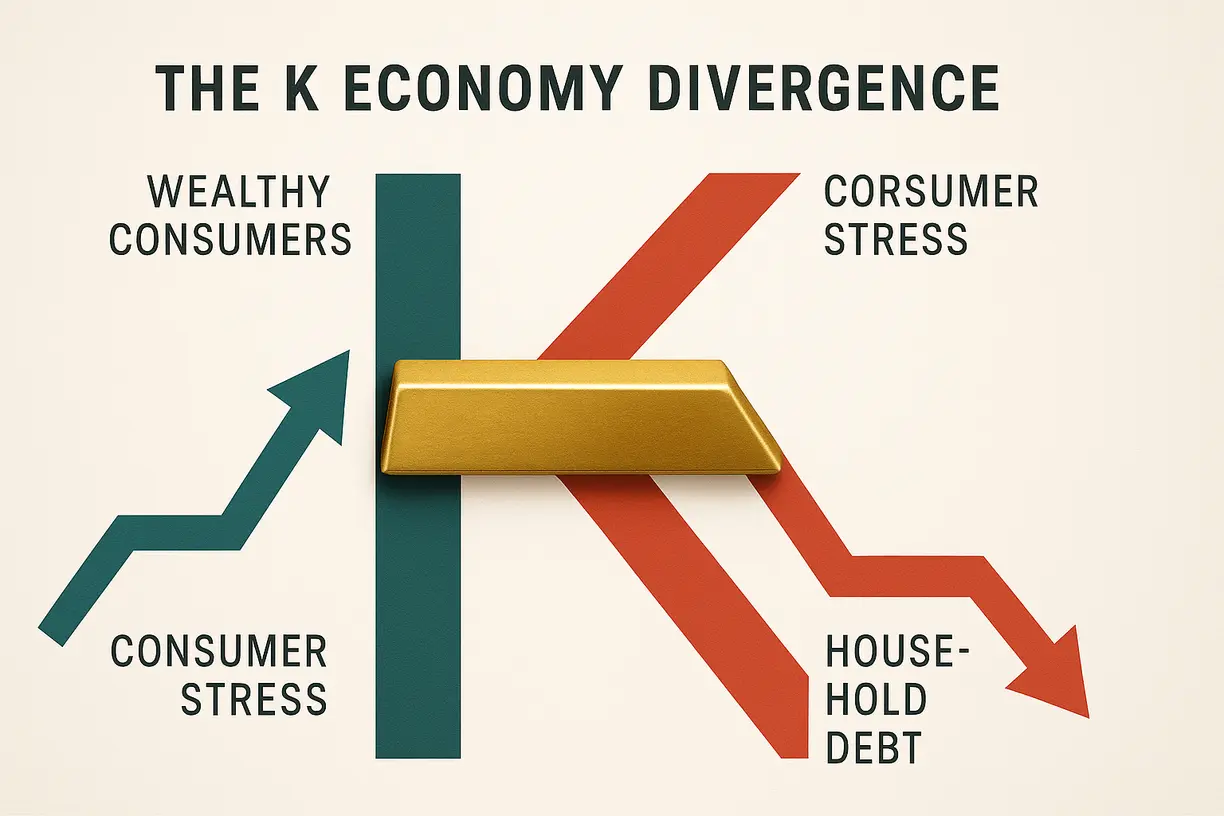
Although the “K-shaped” economy continues to grow, Layton said he suspects the two sides will eventually converge. He added that it may only be a matter of time before weak consumer demand starts to impact broader economic activity.
"We're seeing families hit crisis mode heading into the holiday season,” said Layton. “The question now is whether this consumer legal stress translates into a pullback in spending in the final quarter of 2025."
Although consumer financial stress levels remain well below the record highs reported during the 2008 Great Financial Crisis, Layton said the concern is that stress will continue to grow.
“We are concerned that these conditions will continue into 2026,” he said. “We see nothing in our data that would suggest that these numbers are going to improve any time soon.”
Some analysts note that consumer demand has continued to support economic activity as the labor market remains relatively healthy. However, Layton warned that any weakness in the labor market could exacerbate financial stress levels.
LegalShield noted that last month, private-sector employment data showed the economy lost 32,000 jobs. At the same time, higher inflation and elevated interest rates continue to increase the burden on consumers.
“While the Federal Reserve cut rates in September for the first time since December 2024, borrowing costs remain significantly higher than before the pandemic. This means families already struggling with debt are getting little relief, even as they take on more credit to make ends meet,” LegalShield said.
