
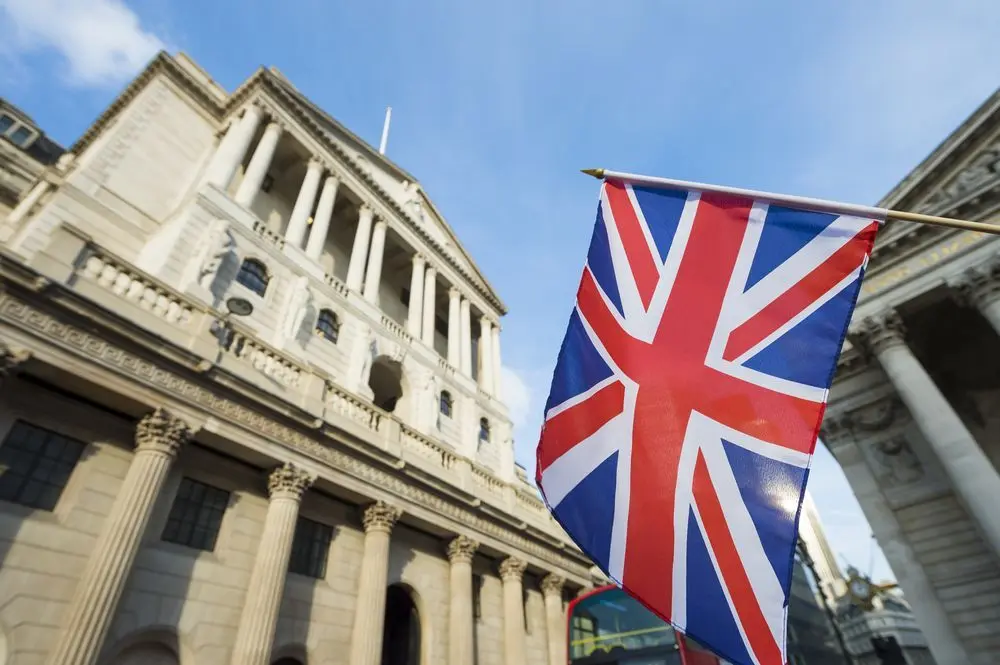
(Kitco News) - Broader gold prices remain under pressure against some major global currencies and are struggling to attract a consistent bid against the British pound after the Bank of England left interest rates unchanged.
In an anticipated move, the BoE said it would maintain its Bank Rate at 3.75% following Thursday’s monetary policy meeting. However, the vote showed that more central bankers are supporting interest rate cuts.
The vote breakdown showed that four members of the committee voted to cut rates by 25 basis points. According to consensus estimates, economists had expected only two votes in favor of a rate cut.
According to the minutes, although U.K. inflation remains elevated, there appears to be growing concern about economic activity.
“On balance, the Committee judged that the risk from greater inflation persistence had continued to become less pronounced, while some risks to inflation from weaker demand and a loosening labour market remained,” the minutes said.
Beyond the vote, the bank continues to walk a fine line with its monetary policy. The central bank strengthened its guidance around future easing, noting explicitly that Bank Rate is ‘likely to be reduced further’; however, it also noted that cuts are contingent on the inflation outlook remaining favourable.
The gold market is seeing broad-based weakness against global currencies, with price action against the pound following the broader trend. Spot gold last traded at £3,562.95 an ounce, down nearly 2% on the day.
However, according to some analysts, the dovish tilt in the BoE’s monetary policy announcement is helping the yellow metal outperform the pound compared to the U.S. dollar. Spot gold is currently trading at $4,837.50 an ounce, down 2.5% on the day.
Although global central banks, led by the Federal Reserve, are maintaining neutral monetary policies, analysts expect that slowing global economic activity will eventually force rate cuts by the second half of the year. This broad environment of falling interest rate should provide further support for global gold prices.
Michael Brown, Senior Market Analyst at Pepperstone, said that it is clear that further cuts remain on the cards and this meeting is laying the groundwork for expected easing in March.
“My base case remains that the next cut will come at the March meeting, by which stage the MPC will have not only another CPI report likely pointing to embedded disinflationary pressures, but also two further employment reports likely signalling a further margin of slack emerging,” he said in a note. “Beyond March, further rate reductions are likely, taking Bank Rate back to a neutral level around the 3% mark by the end of summer, with risks to this view likely tilting in a more dovish direction, given the relatively rapid pace at which the employment backdrop continues to weaken, and inflationary risks diminish.’
