
(Kitco News) - The gold market is once again struggling to maintain support near $5,000 an ounce as U.S. and Israeli military action against Iran boosts the U.S. dollar as a hedge against a potential liquidity crisis and rising inflation threats.
However, one market strategist says investors should not be valuing gold based on its relationship with the U.S. dollar, arguing that the traditional correlation between the two assets has broken down in recent years.
In an interview with Kitco News, Robert Minter, Director of ETF Strategy at abrdn, said the relationship between gold, interest rates, and the U.S. dollar stopped driving the precious metal’s price in 2022 and is unlikely to return. Instead, he said investors should be looking at broader structural forces shaping the global economy and ongoing central bank purchases.
Minter explained that the steady expansion of global central bank balance sheets is the most consistent factor behind gold’s long-term performance.
“When you look at how much the purchasing power of major currencies has been watered down, and you look at the size of central bank balance sheets, they’re up about a thousand percent since 1999,” he said. “Big surprise—so is gold.”
Minter added that for many investors, this dynamic is becoming increasingly visible in their everyday lives as rising costs erode purchasing power.
Minter said financial advisors are increasingly fielding questions from clients about how to protect their portfolios from persistent currency debasement.
“Advisors are hearing from clients about the erosion of their purchasing power in their day-to-day lives,” he said. “They’re looking for something they can put into a portfolio that helps offset that loss, and clearly commodities—especially gold—can play that role.”
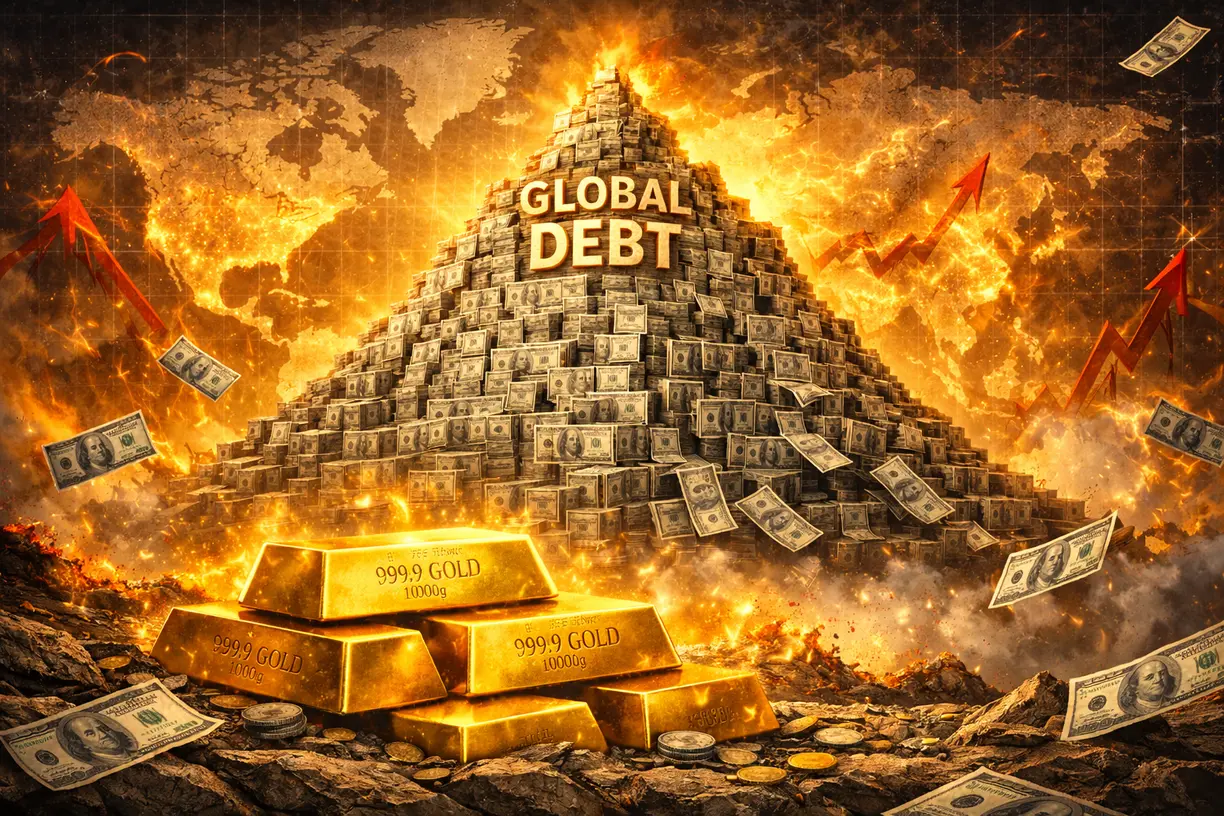
Minter added that the broader macroeconomic backdrop also supports continued demand for the precious metal, as governments show little willingness—or ability—to reduce mounting debt levels.
In his view, meaningful downward pressure on gold would likely require countries to significantly reduce sovereign debt, a scenario he said appears unlikely given the current political and economic environment.
“There are no solutions currently being implemented that can lower sovereign debt in most of the major fiat currency nations,” he said.
As a result, Minter expects gold’s long-term trend to remain intact despite short-term volatility tied to geopolitics or currency movements.
From a technical perspective, he noted that gold’s price action continues to reflect a strong bullish trend, pointing out that prices remain well above the 50-day moving average—a commonly used indicator among institutional investors.
“You are still in a bull market by any objective measure,” he said.
According to Minter, geopolitical tensions and ongoing conflicts will only strengthen the current trend as broader official demand from central banks provides long-term support.
While short-term liquidity needs may push investors toward the U.S. dollar during periods of crisis, he said many central banks—particularly in emerging markets—remain focused on increasing their gold reserves as a hedge against long-term financial risks.
Although central bank purchases slowed slightly last year to 863 tonnes, down from more than 1,000 tonnes in each of the previous three years, Minter noted that rising prices meant governments actually spent significantly more money acquiring bullion.
The average gold price last year was roughly 44% higher than the previous year, meaning central banks allocated about 25% more capital to maintain their buying pace.
“That makes it very hard to say central bank demand has diminished,” he said. “They clearly spent an awful lot more last year to reach their goal of holding more gold.”
In this environment, abrdn currently maintains a 12-month gold price forecast of around $5,500 an ounce, which Minter described as a conservative target given the growing macroeconomic risks facing global markets.
He added that many investors remain hesitant to enter the gold market after the strong rally of the past few years. However, he believes further gains could eventually draw sidelined capital back into the sector.
“It will probably take another move higher in gold to get some of those investors off the fence,” he said.
