
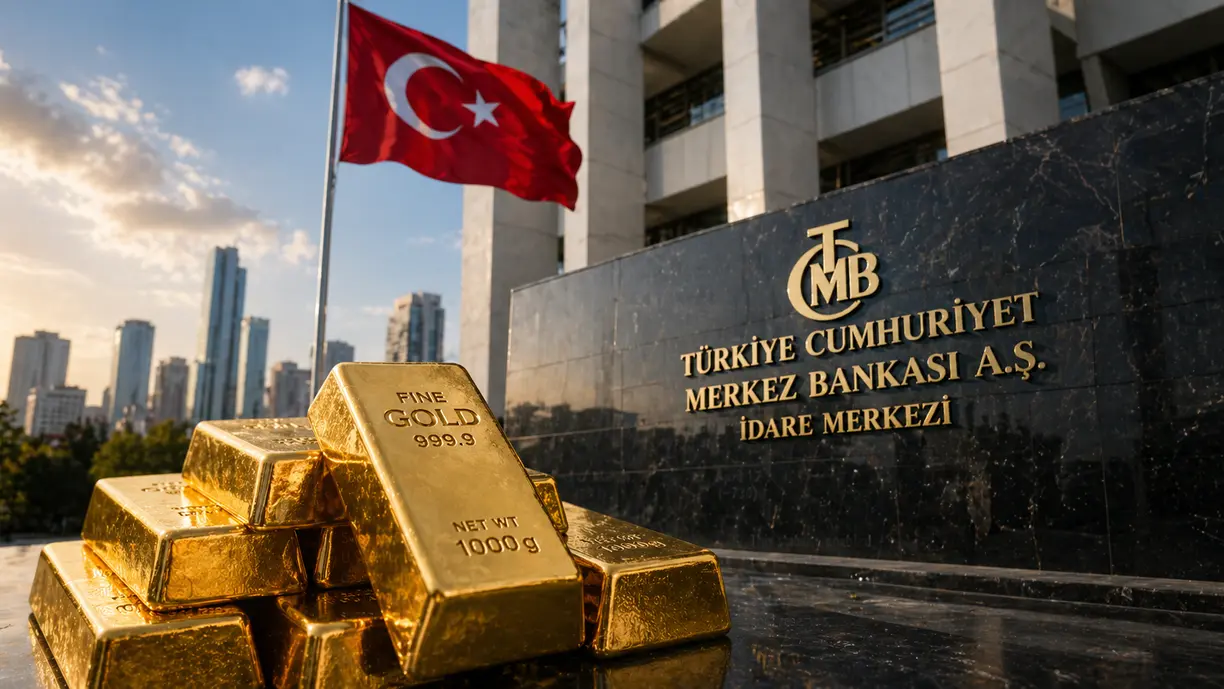
(Kitco News) – Türkiye’s central bank is rebuilding its gold reserves as it unwinds some of the dollar-for-gold swap positions it employed during peak market stress, with physical holdings rising to around 730 tonnes as of April 17, according to the latest data.
The bank increased its gold reserves by 30.7 tonnes over the past week, the latest government data showed, bringing total gains to 36.4 tonnes in the past two weeks and reversing the steep drawdown from its earlier liquidity operations.
The Turkish government opened approximately 73 tonnes worth of gold swap positions in March, while some of the central bank’s bullion was also sold during that period, resulting in a sharp decline in reserves. The swap operations provided U.S. dollar liquidity to address accelerating capital outflows and rising domestic demand for foreign currency as the central bank intervened to support the Turkish lira.
Before the start of the Iran war, the central bank held nearly 830 tonnes of gold. That figure dropped by 127 tonnes to a total of 693 tonnes by the end of March.
Following the ceasefire between the United States and Iran, market conditions stabilized, reducing pressure on Turkish assets and enabling the central bank to begin rebuilding its gold reserves.
Central bank gold demand continues to play an important role in the precious metals market, with the sovereign segment becoming much more volatile as central banks such as Türkiye’s have been forced to monetize their gold reserves to protect their economies, which have been impacted by the ongoing war with Iran.
Turkey’s central bank has been the most transparent regarding its official reserves with data showing that its gold holdings declined by more than 118 tonnes in March.
According to reports, this is the biggest drawdown in Turkey’s gold reserves since 2013.
The central bank said at the time that it had sold some of its gold but had monetized most of it through swap agreements. It has used this liquidity to buy lira and other foreign currencies to support its economy.
The ongoing war in the Middle East is significantly impacting global economic activity, as disruptions to the global supply chain—particularly in the energy market—are driving inflationary pressures higher.
