
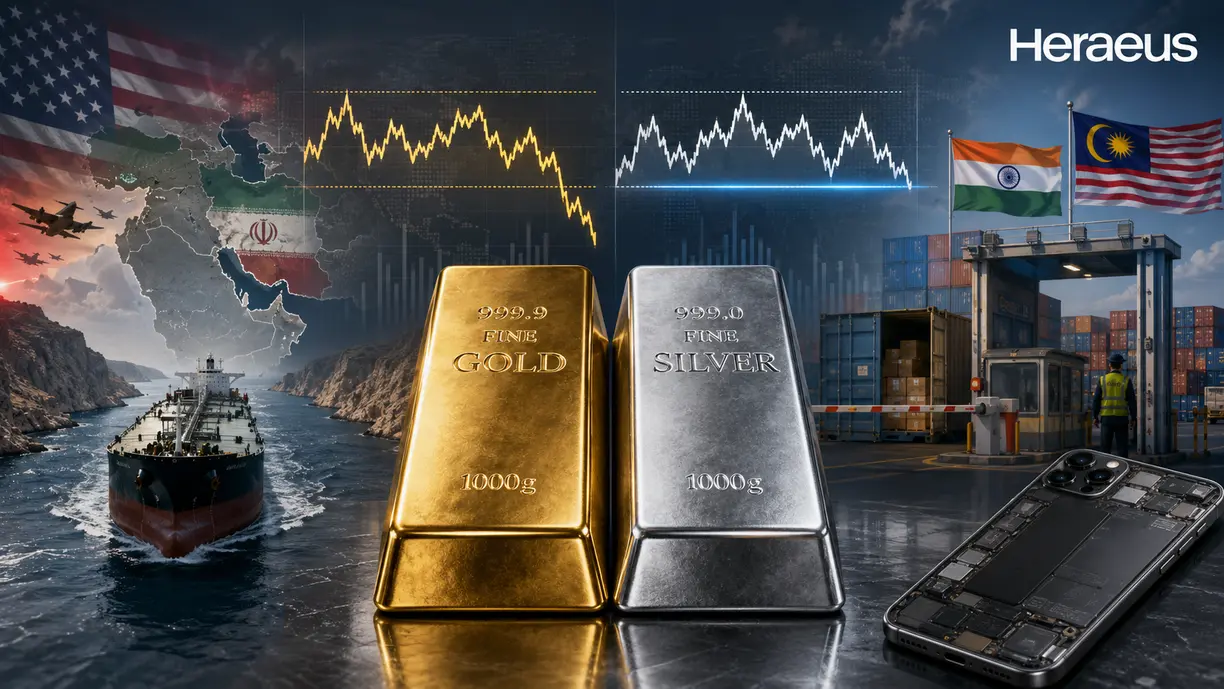
(Kitco News) – Gold and silver prices are trapped in the range established earlier in the U.S.-Iran conflict, while high prices and new import duties are impacting key areas of the Asian market, according to precious metals analysts at Heraeus.
In their latest update, the analysts noted that gold prices continue to be dominated by shifting Iran-U.S. negotiations.
“Gold prices initially pulled back this week following apparent progress in talks between Iran and the US, with a view to ending the conflict and re-opening the Strait of Hormuz,” they wrote. “Although the picture is unclear, with both sides contradicting each other, it seems they are a lot closer to a resolution than a few weeks ago. Since then, on 28 May further, more concrete, details of a deal emerged, prompting a steadying of gold prices. The potential deal is likely to include an ending of the US blockade of the Strait with Iran allowing safe passage for all commercial vessels. It is also likely that the more contentious parts of the deal, such as discussions over the Iranian nuclear programme, will be delayed and take place over a 60-day period following the signing of a deal.”
“Since the beginning of the US-Iran war, precious metals have tended to sell off on escalation, owing to fear of inflation leading to rate hikes, and then rally on de-escalation,” the analysts wrote. “This time, however, precious metals initially sold off following the clearest sign of an imminent end to the conflict so far. There are two potential reasons for this. Firstly, the markets have become desensitised to geopolitical news as much of the emerging news was strongly contradictory and difficult to trust. Secondly, and perhaps more worrying, markets believe the damage has already been done and significant near-term inflation is inevitable and interest rate hikes are sure to follow.”
“The late-week rally starting on 28 May suggests the former reason is more likely, but if the deal is not signed quickly the focus will turn to a Federal Reserve that, up to now, has remained resilient in its neutrality on talk of interest rates,” they added. “The futures market shows a roughly 50% chance that the Fed raises rates by the end of the year.”
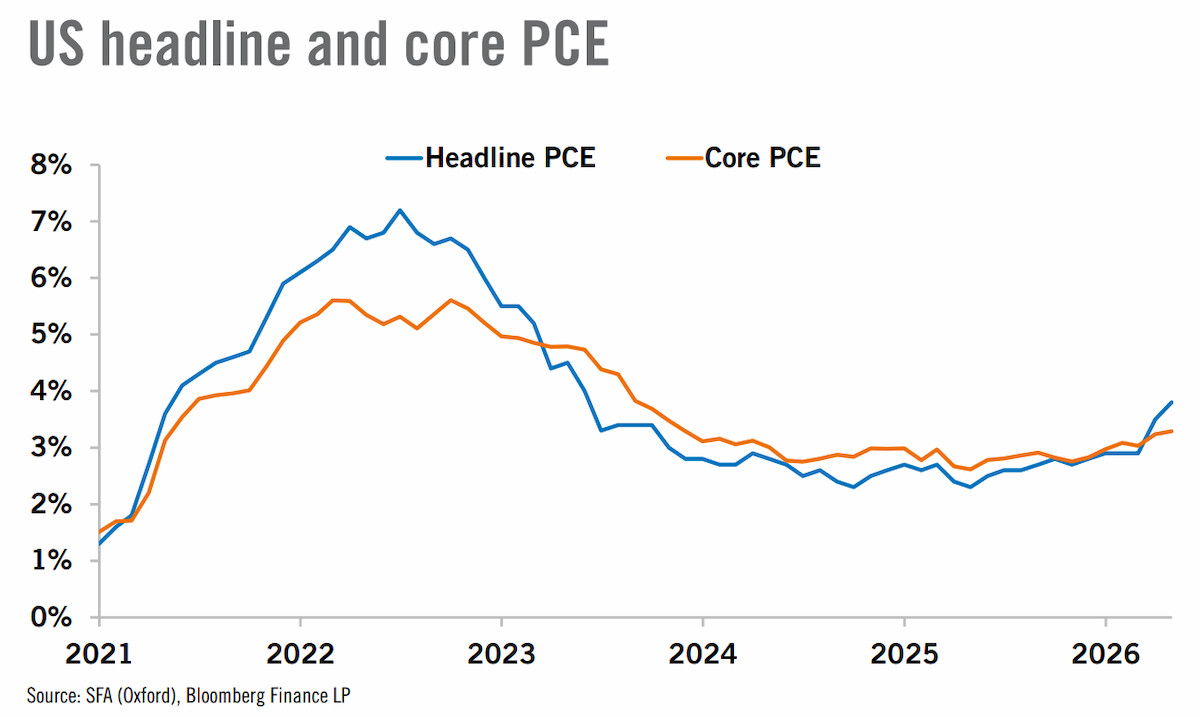
Heraeus analysts said that with PCE inflation measures rising, the Fed is under increasing pressure to adopt a more hawkish stance. “Markets will be hoping an imminent end to the conflict allows the Fed to stay on course and return to gradual easing,” they wrote. “However, the 4-6-week time lag between an opening of the Strait and fresh oil/feedstocks reaching end-users will be critical as global economies start to show real signs of stress.”
The analysts also noted that Malaysia has followed India in levying import tariffs on gold bullion with a new 10% duty on gold bars. “The duty applies only to LBMA gold bars with 9999 fineness,” they said. “Last week, India announced an increase of import duties on a range of gold products to protect the currency and strengthen the balance of payments. Although the announcement by Malaysia is similar, it is not clear exactly why this levy has been imposed and there has been no official reason given.”
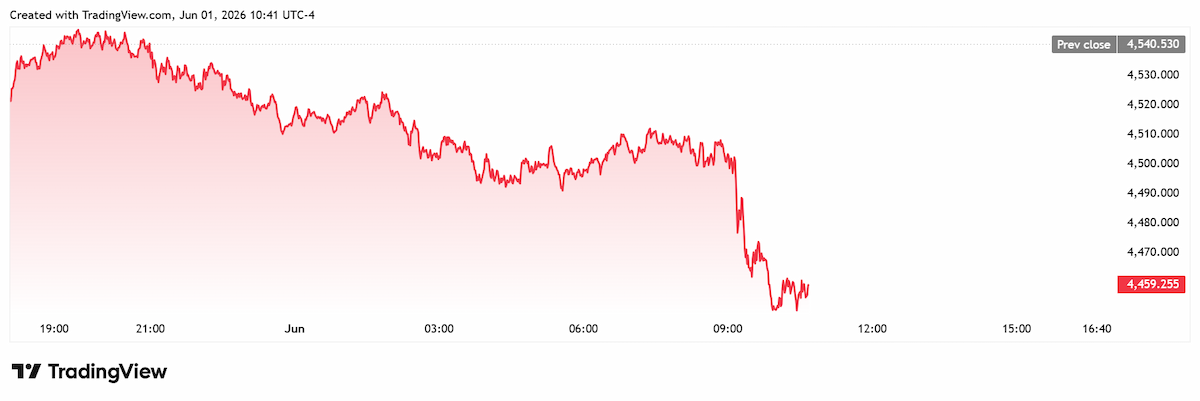
Spot gold saw a sharp decline ahead of the North American open on Monday after near-term support at $4,500 failed, last trading at $4,459.48 for a loss of 1.79% on the session.
Turning to silver, Heraeus analysts noted that the gray metal has also been range-bound since the beginning of the US-Iran war.
“The silver price has fluctuated between $70/oz and $90/oz since the late January/early February sell-off except for two short periods when the price moved briefly above/below these levels,” they wrote. “The first was just prior to the beginning of the Middle East conflict when it appeared that a strong relief rally took the price up to $93.79/oz on 27 February before being scuppered by the start of the war. The second was in mid-March when, before the first signs of deescalation, the price dropped down to $67.92/oz; upon de-escalation talks the price has since rallied off these lows.”
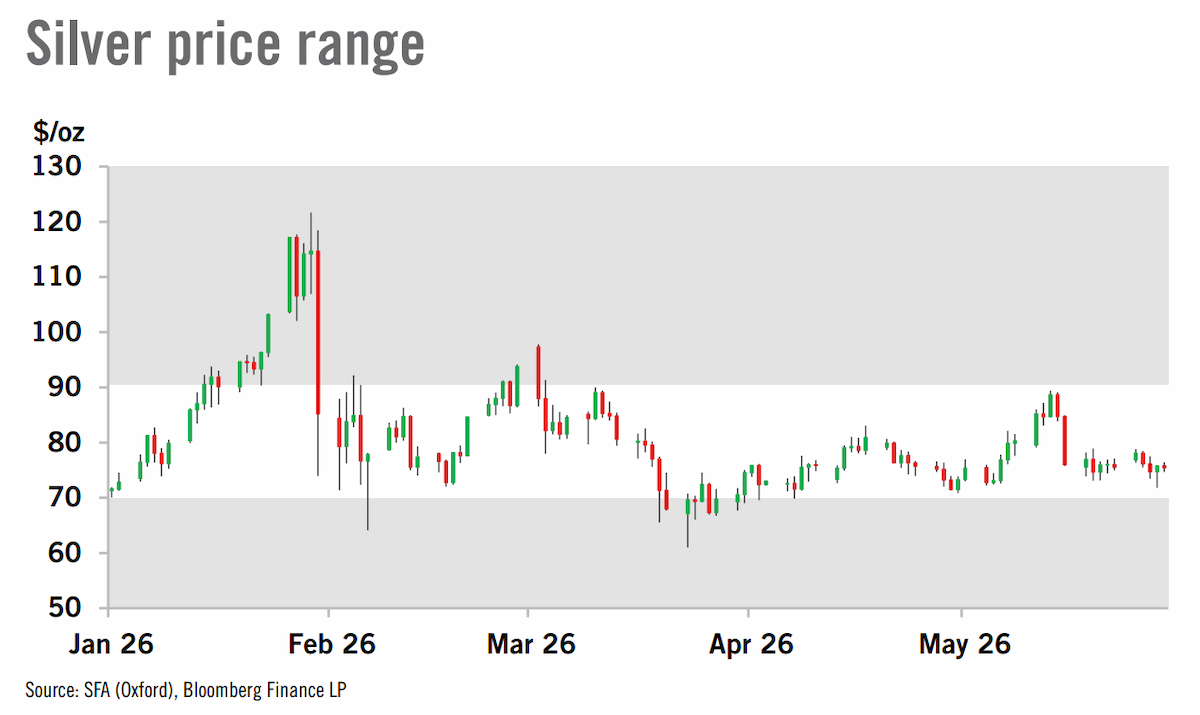
“With the price currently towards the bottom of this range, it seems likely that a re-escalation of the conflict would lead to a serious challenge, if not a clean break, of the $70/oz level, while a peace agreement could see a rally back up into the mid-range,” they warned.
The analysts also noted that European smartphone demand is strengthening despite low consumer sentiment. “The smartphone market is a small but growing segment of silver demand, with around 0.3 g in each device for electrical contacts and solder.”
And the sharp rise in silver prices over the last year has led to a rise in lower-grade silver in India. “Silver hallmarking has been a mandatory requirement in India since September 2025,” they said. “However, there has been a lack of enforcement leading to large amounts of adulterated silver in circulation. Jewellery and investment bars and coins along with items used for worship are affected. India is the world’s largest silver jewellery market with 70.3 moz of silver jewellery fabricated in 2025, though this was down 20% from 87.9 moz in 2024.”
Heraeus wrote that refiners have approached the Bureau of Indian Standards asking for better enforcement of mandatory hallmarking to safeguard consumers. “The majority of silver articles in India have been found to contain prohibited elements such as cadmium and lead,” the analysts noted, citing local sources. “India does have a network of assaying centres across the country, but as there are so few of them lower silver standards are likely to persist for some time.”
Silver prices were positive earlier Monday morning, but they slid alongside gold around 9 a.m. ET.
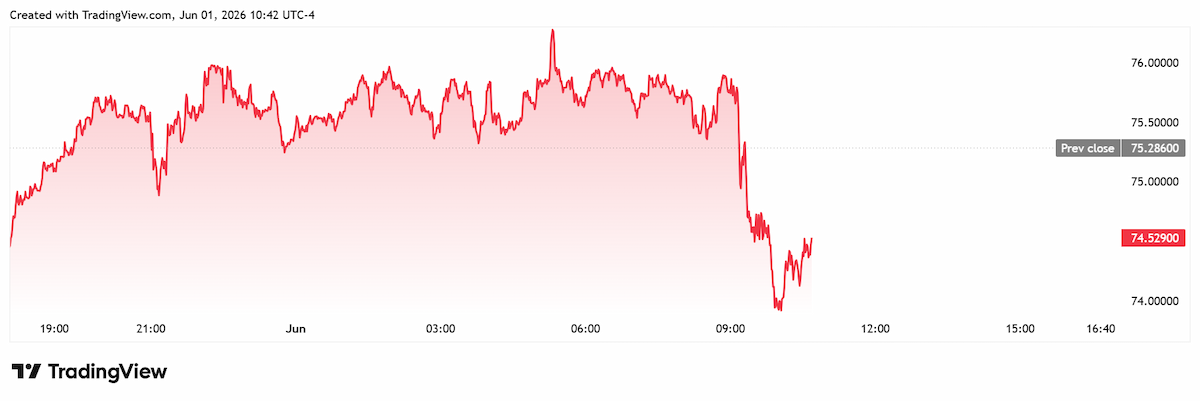
Spot silver last traded at $74.500 per ounce for a loss of 1.03% on the daily chart.
