
(Kitco News) – Asian investors continued to buy gold in June even as their Western counterparts exited positions, while central bank gold demand around the globe will likely rise and will support gold prices for many years to come, according to precious metals market analysts at Schroders.
In their latest monthly gold outlook, Schroders analysts said the market returned to an East/West dynamic in June as prices declined nearly 12%.
“Primarily eastern emerging market central banks have leaned into lower gold prices to buy aggressively for secular reasons,” they said. “Western investors meanwhile have been liquidating, largely for cyclical “hawkish Fed” reasons (perhaps some also believe in Warsh ‘regime change’ at the Fed, best of luck with that).”
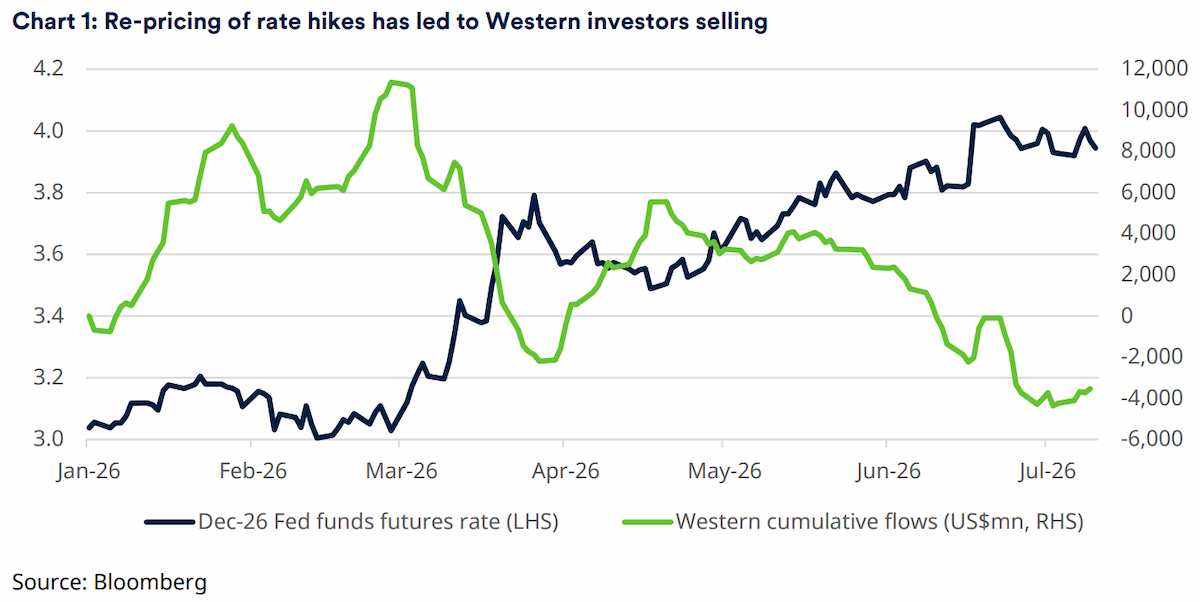
Schroders shares the market consensus that gold prices will bottom at some point in the next 3-6 months after the Fed’s perceived hawkishness diminishes.
“Our own head of economics research David Rees argues that US inflation is broadening, and the economy is operating above capacity – i.e. expect hikes,” the analysts wrote. “We are less convinced. Inflationary tail risks from energy prices are reduced, forward inflation expectations have already collapsed, and labour market data is very mixed with no sign of sticky wage inflation.”
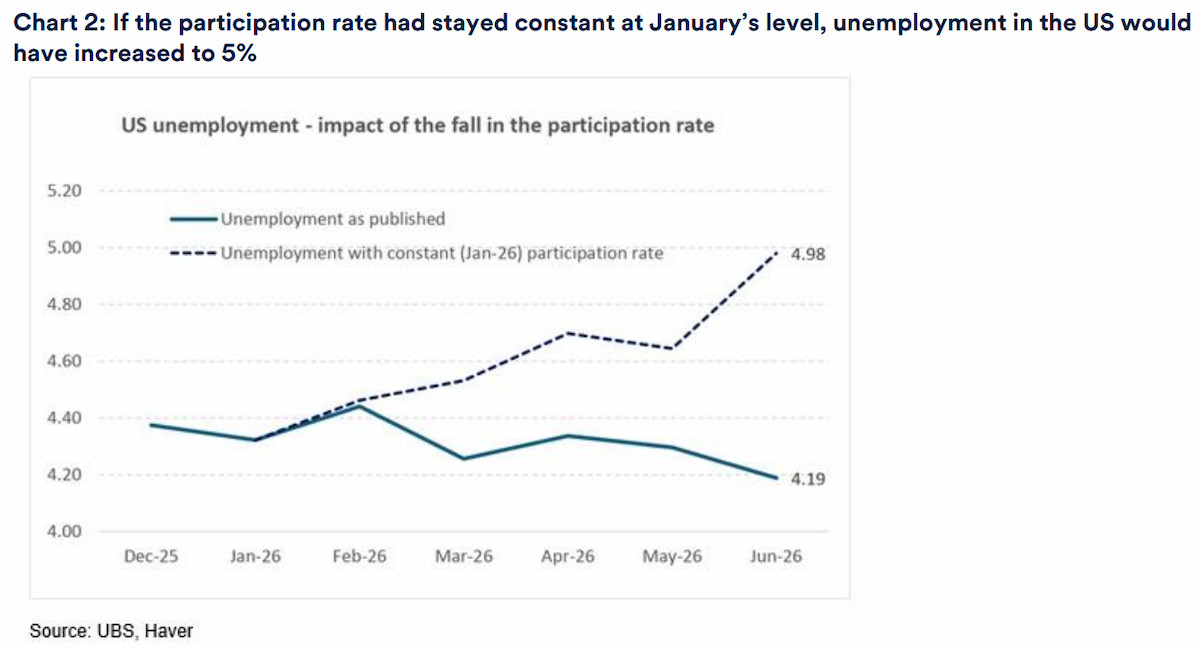
They added that the drop in the participation rate is the only thing preventing U.S. unemployment from reaching 5%, after which “presumably a very different narrative would be dominant.”
Schroders believes we are already in an era of fiscal dominance, which limits the degree to which the Fed can raise interest rates to combat inflation.
“Treasury debt rollover (US$8-US$10tn next 12 months) plus deficit financing requirements (another US$2tn?) mean unprecedented issuance volumes amidst an interest expense budget line item that is already larger than the defence budget,” they wrote. “Indeed, whether the monetary policy transmission mechanism is already being severely impaired by fiscal realities (because raising rates can be stimulatory to receivers of interest even if higher rates tighten money to borrowers) is already a valid debate.”
The analysts also attempt to discern how long the recent trend of above-average central bank gold buying might persist, calling it “a key question for the durability of this gold bull market.”
They note that Poland has been a major buyer since Russia’s invasion of Ukraine in 2022, and while the National Bank of Poland is likely to reach its 700-tonne target this year, it’s also likely to keep buying even after the target is met.
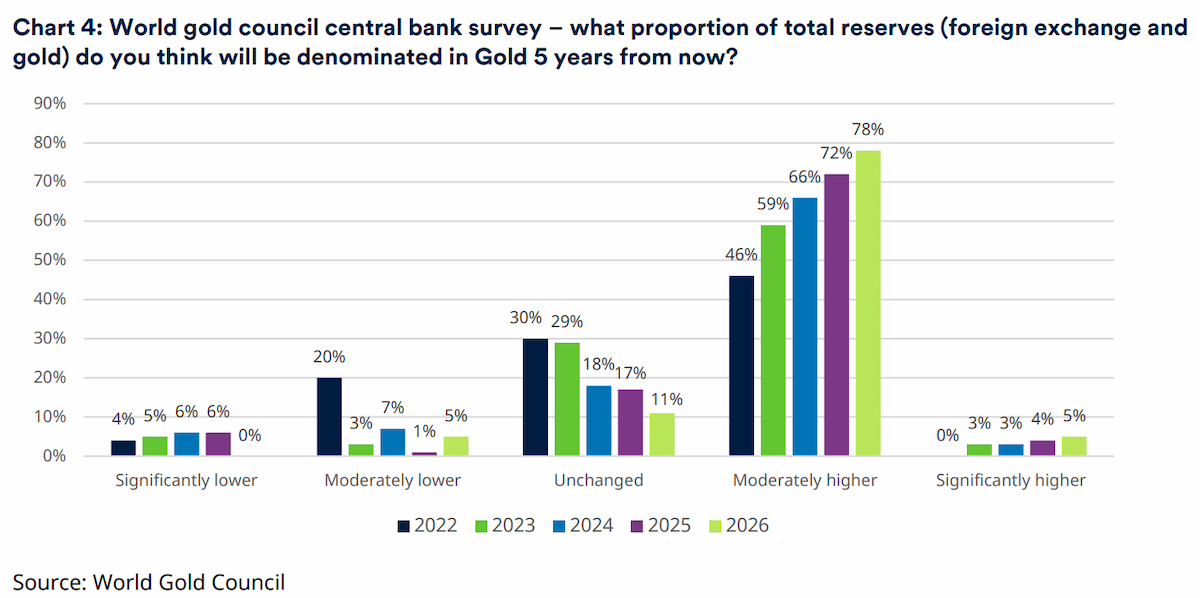
“Much more important is whether [Poland] is an outlier or an aggressive early mover in emerging market central bank gold accumulation,” the analysts wrote. “The survey data (both from the World Gold Council and the OMFIF survey) suggests the latter.”
Schroders sees China’s PBOC as the most important sovereign buyer due to its own large and ongoing purchases as well as the ‘signaling effect’ their buying has on China’s domestic demand – and potentially on other central banks.
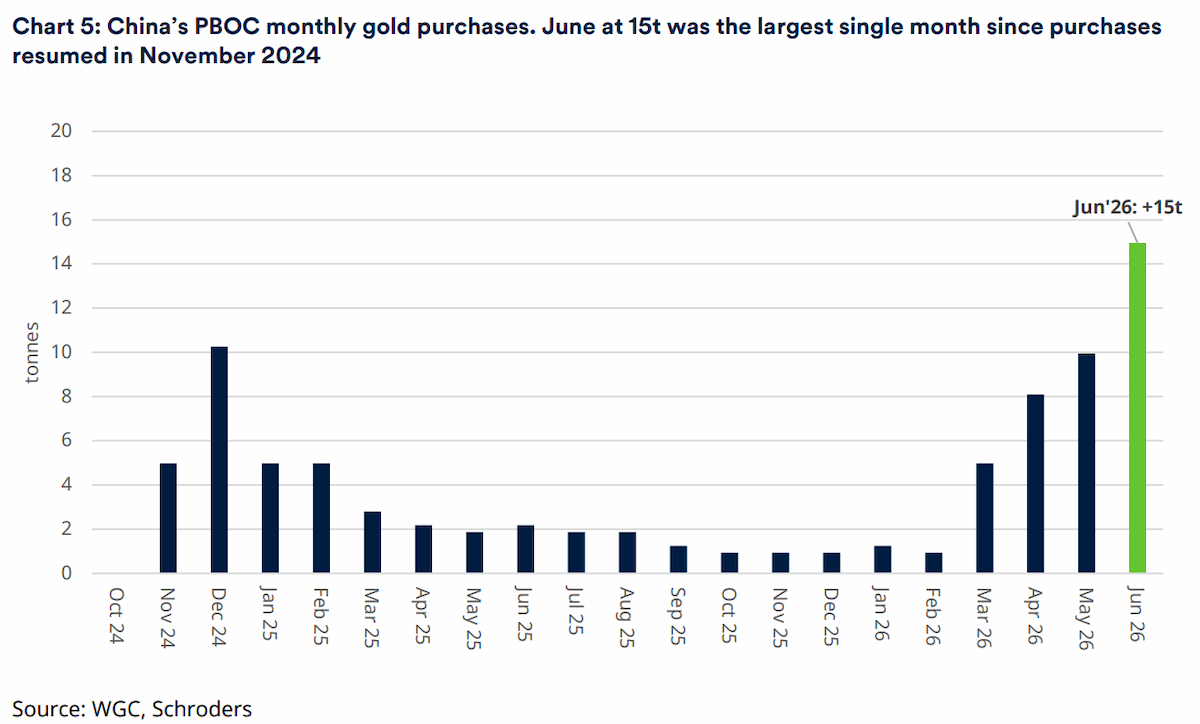
“From a signalling perspective it is very interesting that buying has increased so much as prices have dropped,” they wrote. “From 2t of buying in February when prices were over US$5,000/oz, average buying has increased >7x to 15t in June (average price US$4,250/Oz). An indication of what is viewed as value’ in Beijing? That China was reporting purchases at all when gold was above US$5,000/Oz is interesting on the same basis.”
Schroders believes the true scale of PBoC buying may be much greater. think it’s also possible buying is understated, noting that “most of the individual monthly purchases are dwarfed by the statistical catch ups reported in 2003, 2009 and 2015 where the PBOC decided to announce previously undisclosed buying in one go.”
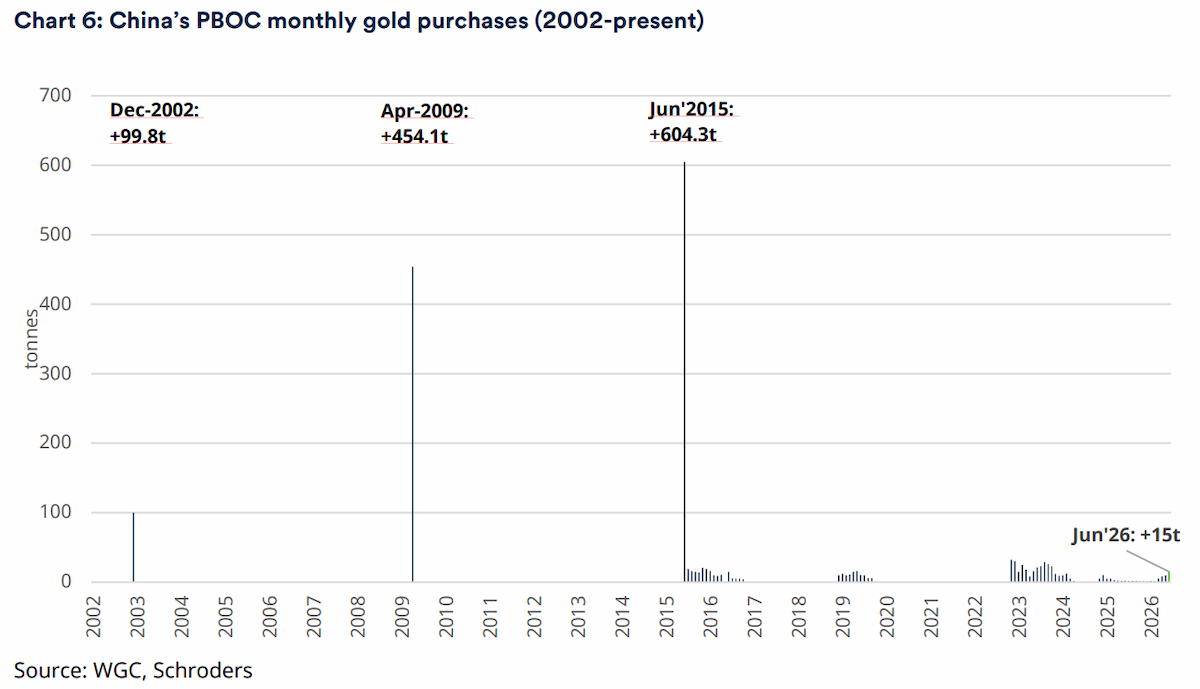
“Given the vast shift in the geopolitical backdrop, not to mention changes to the domestic political landscape of the United States, we wouldn’t be surprised at all if the PBOC (very rationally) are choosing to be selective in what they disclose.”
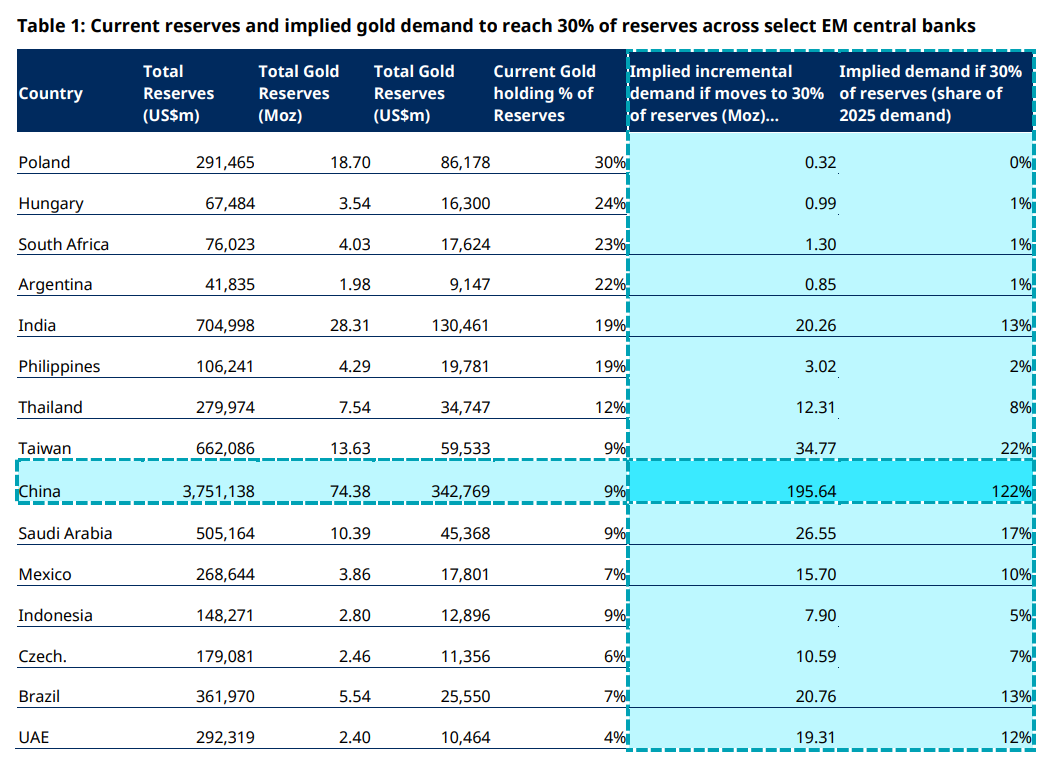
The analysts characterize the runway for China’s further bullion purchases as “exceptionally long.”
“At $4,200/oz, current gold reserves as a % of total reserves would be 8.3%,” they said. “To get to 30%, all else equal, we would need to see June 15t purchase volumes repeated monthly for the next 33 years.”
They noted that based on this 30% benchmark, the potential for gold purchases by other central banks in the years to come is also very large.