
(Kitco News) - The Bank of Canada (BoC) maintained its key overnight rate at 2.25% on Wednesday, as expected, with the bank rate staying at 2.50% and the deposit rate remaining at 2.20%.
The BoC said the ongoing conflict in the Middle East is keeping energy prices high. “As well, new US tariffs and Canadian counter-measures have been announced following the breakdown of trade talks between Canada and the United States,” they said. “Both situations remain fluid.”
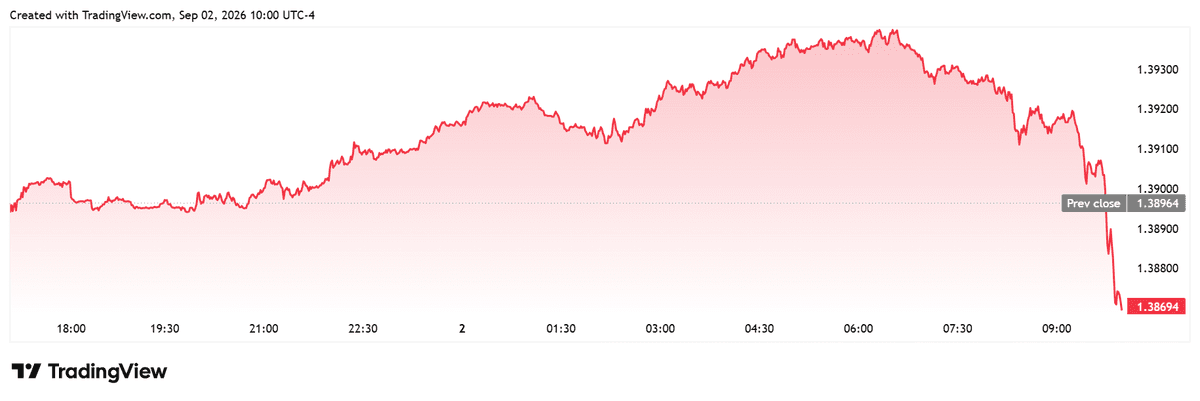
The Canadian dollar fell to session lows in the minutes after the announcement, with USD/CAD last trading at 1.3869 per U.S. dollar, down 0.19% on the session.
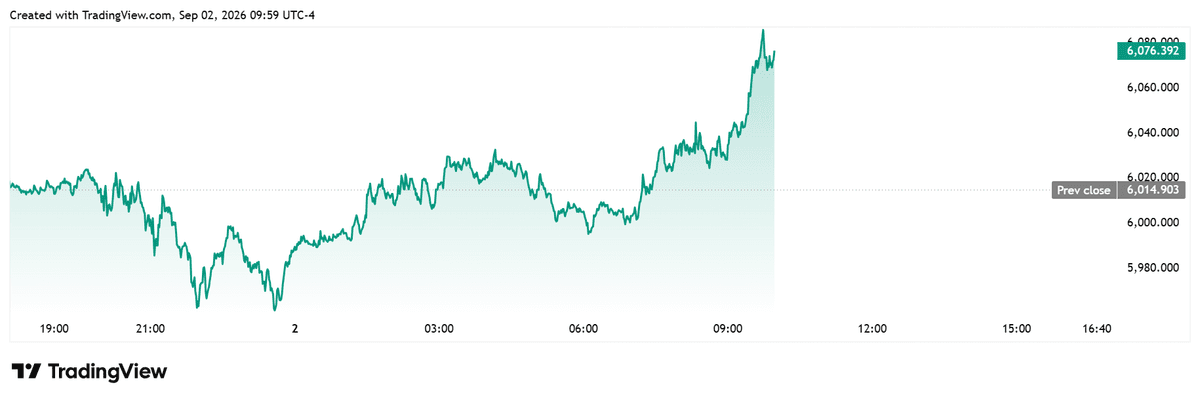
Gold rose to a session high of $6,087.64 per ounce in Canadian dollar terms in the minutes before the announcement, and the yellow metal continued to trade not far from its highs afterward. XAU/CAD last traded at $6,076.22 per ounce for a gain of 1.02% on the daily chart. Track the live gold price in Canadian dollars — per ounce, gram and kilo, updated in real time.
The BoC said in its announcement that Canadian financial conditions have tightened since July. “Long-term bond yields have moved up globally, including in Canada,” they said. “The Canadian dollar has appreciated slightly on US-dollar weakness.”
They noted that Canadian economic activity strengthened in the second quarter, with GDP up by 3.3%, following “very weak” growth in the first quarter. “Labour market conditions have improved in recent months, with the unemployment rate edging down to 6.4% in July,” they said. “ Still, demand for labour remains subdued and indicators point to continued excess supply in the economy.”
Turning to inflation, the BoC noted that CPI inflation has been near 3% in recent months, driven by higher gasoline prices, but “there has been little evidence of higher energy prices spreading to other components of inflation: excluding gasoline, inflation was 2.2% and measures of core inflation remained close to 2% in July.”
They warned, however, that “upside risks to the Bank’s inflation forecast have increased.”
“The longer that high oil prices and elevated refinery margins persist, the greater the risk of spillover to the prices of other goods and services,” the BoC said. “New US tariffs and Canadian counter-tariffs will also raise costs for some businesses and could feed into consumer prices over time.”
“Overall, recent data reaffirm Governing Council’s view of a broadening recovery in Canada’s economy,” they concluded. “However, uncertainty is high and new US tariffs and threats of further action pose risks to the sustainability of the recovery.”
Kitco tracks live market prices in Canada — precious metals, base metals and crypto in Canadian dollars.
