
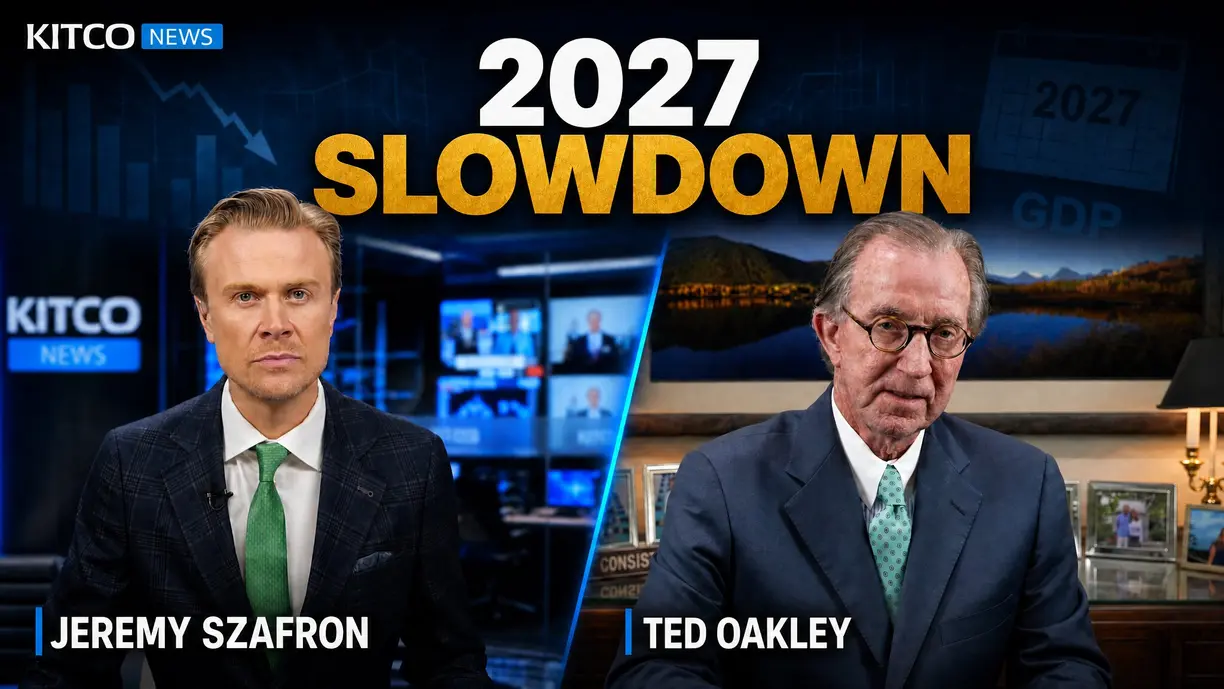
(Kitco News) - Tech stocks took a beating on Nov. 5, but one money manager who has been through every market cycle since the 1970s was already heading for the exits.
The Nasdaq 100 fell as much as 5%, and a gauge of the biggest chipmakers sank to 36% below its June record, according to Bloomberg. Nvidia dropped nearly 8%. Investors ran to consumer staples, health care and Treasuries instead.
A day earlier, Ted Oakley told Kitco News that his firm, Austin, Texas-based Oxbow Advisors, is selling Google and Microsoft. Asked whether people with big tech in their retirement accounts should add more, the founder and managing partner kept it simple: "If I were them, I wouldn't buy any of them."
Oxbow has also taken profits on its biggest energy winners and trimmed its gold miners, and it's moving the cash into short-term Treasuries. The bet is that a weaker economy in 2027 will bring lower interest rates. The gold bullion isn't going anywhere.
"Anything you sell now, you shouldn't redeploy," Oakley said. "You need to go into the fixed income Treasury market."
He spoke the day after Democrats won control of both the House and the Senate. Gold climbed more than $120 an ounce that day and was trading above $4,120 on Nov. 5, according to Kitco data.
Gold yes, miners not yet
Oxbow never sells its bullion, Oakley said. The miners are another story. The firm has cut back on them over the past two months because they tend to fall much harder than the metal. He pointed to 2008: "Gold was down over 20%. Well, the miners were down over 60."
"You can own the bullion forever, you should, but not the same way with the miners," he said.
Don't count on gold to protect you in a broad selloff, either. "When the markets come off big, everything goes down, including gold … including the miners."
That isn't a call for individual investors to dump their metal. If they want to hold their gold and silver, "that's fine," he said.
For buyers, it comes down to what they already own. "If you don't own it, you can buy it there for sure," he said. "If you own it, I wouldn't be rushing to buy more of it right this minute."
Lower rates would give gold a lift. "If they get into the second quarter and they're lowering interest rates, you know, gold likes that."
Oxbow is out of silver and silver miners altogether. Silver hit a record $121.62 on Jan. 29 after a roughly 270% run in 12 months, and Oakley said a move like that usually means 15 to 18 months of waiting.

A weaker 2027
"We think we're at the end of this cycle," Oakley said.
History argues otherwise. The S&P 500 has been higher one year after every midterm election since 1950, according to the Stock Trader's Almanac. Oakley says he has read the almanac for years, but he isn't relying on it. "Sometimes it works and sometimes it doesn't."
He expects "some fairly decent weakness the first seven, eight, nine months of the year." The numbers haven't turned yet. Initial jobless claims matched their lowest level since 1969 last week, the Labor Department said Nov. 5.
Oakley doesn't see stagflation coming. He thinks a slowdown will cool prices. The Fed's preferred inflation gauge was running at 3.6% in September, according to the Bureau of Economic Analysis.
"In fact, I'll be surprised if by the middle of the year they're not lowering interest rates," he said.
The market sees it differently. The Fed raised rates in September, and fed funds futures point to more hikes in December and March, Bloomberg reported.
Selling big tech
When the Nasdaq 100 rose more than 1% after the vote on Nov. 4, Oakley said he would sell into the gain. He likened it to 2000, when a rebound in tech stocks lulled investors before the market "rolled over and really died the next two years."
What worries him is how much the biggest companies have raised through debt and stock sales, which he said "really affects their free cash flow." Microsoft, Oracle and Meta have sold a combined $50 billion of bonds in the U.S. in roughly the past week to pay for AI infrastructure, Bloomberg reported.
He expects some of them to report next year that they aren't as profitable as investors thought. "That's just as bad as losing money almost, because what happens is people turn around and sell them."
Investors have heard the same pitch for years, he said: "Hey, just buy the S&P 500 and it'll all be okay."
"That concept, we think, is generally coming to an end."
Into Treasuries
The cash is going into Treasuries maturing in three to five years, which Oakley expects to rise in price as rates fall. "Those are gonna trade okay for you," he said.
Treasuries now make up about 40% to 42% of Oxbow's stock strategy and about 58% of its high-income strategy. Oxbow is staying away from 30-year bonds. "We've been burned before on the 30-year Treasury."
Energy and commodities
Energy has been the year's big winner, with the S&P 500 energy sector returning about 56% through Oct. 16, according to First Trust Portfolios. About two weeks before the interview, Oxbow sold roughly 20% of its five best energy performers because they had climbed "more than they probably should have."
It also sold SLB, formerly Schlumberger, along with Noble and Antero, while hanging on to its producers, big dividend payers and pipelines. Brent crude dropped nearly 9% on Nov. 4 as traders bet the election would push Washington to wind down the war with Iran, Bloomberg reported.
"You can't let it get away from you," Oakley said. He still thinks oil will do "really well" over the next five to 10 years, just not in the next six months.
Commodities more broadly have softened over the past three or four weeks, which he reads as a sign the economy is slowing. "Copper peaked," he said. Oxbow has trimmed copper and iron and sold its uranium positions as they kept sliding.
He was blunt about Washington's debt. "I don't know what rabbit they're going to pull out of the hat on debt, because they can't pay it off." The answer, he said, is to stop spending, and neither party has done it. "They've never had the guts to do it yet."
A $1 million question
If a new client walked in with $1 million in cash, Oakley said Oxbow would put no more than 20% in stocks, 20% to 25% in its high-income strategy and 50% to 60% in Treasuries. The last two or three months, he said, have been "one of the hardest times to start a portfolio."
Oxbow has about half its clients' money in cash and Treasuries, and its returns this year are "not as high as the S&P, but we're not that far away from it," he said.
"Our first mantra is you gotta protect the capital."
The biggest mistake he sees right now is among investors over 65. Oakley and Oxbow Chief Investment Officer Chance Finucane have a book due in early January, "Asleep at the Wheel," with the tagline "you have too much stock for your age." Many of the retirees he meets have 85% to 90% of their money in stocks, he said.
"They've got $4 or $5 million and it's all they have, and they've got it all exposed to stocks."
See live precious metals prices for gold, silver, platinum and palladium — in USD, CAD and 12 more currencies.
