(Kitco News) - The gold market is seeing a healthy recovery from last week’s 9% drop, with prices pushing back above $3,600 an ounce. However, one precious metals analyst is warning investors that the market could still have further to fall as higher interest rates, a stronger U.S. dollar and weakening investment demand continue to weigh on the precious metal.
In a report published Friday, Bernard Dahdah, a precious metals analyst at Natixis, said that he was not surprised gold prices tested support at $3,500 an ounce. He noted that the bank had highlighted gold’s downside risks in a report published in September.
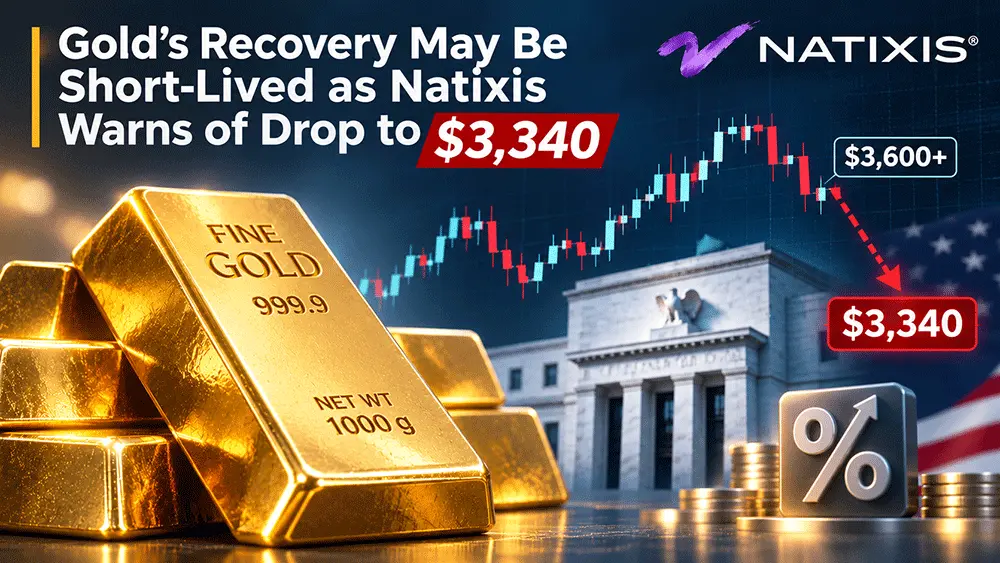
Looking ahead, Dahdah said that gold could fall to $3,340 an ounce by January as the market faces growing headwinds from tighter monetary policy and slowing physical demand.
The precious metal has lost roughly 25% of its value since reaching its record high in August. Although the market has already seen a significant correction, Dahdah said that several new factors have emerged in recent weeks that could extend the selling pressure.
The biggest headwind remains the Federal Reserve, as persistent inflation pressures continue to support expectations that the central bank will raise interest rates through the end of the year and into 2027.
Dahdah noted that Federal Reserve officials have become increasingly hawkish since Fed Chair Kevin Warsh's comments at Jackson Hole in August.
Last week, Fed Governor Christopher Waller called for a 50-basis-point rate hike in December. Meanwhile, St. Louis Federal Reserve President Alberto Musalem warned that the central bank could need several more rate increases before the spring of 2027.
The hawkish outlook was reinforced by the minutes of the Federal Reserve's October monetary policy meeting, which showed that almost all participants expected further rate hikes would likely be appropriate.
Higher interest rates have pushed bond yields and the U.S. dollar higher, increasing the opportunity cost of holding gold, a non-yielding asset.
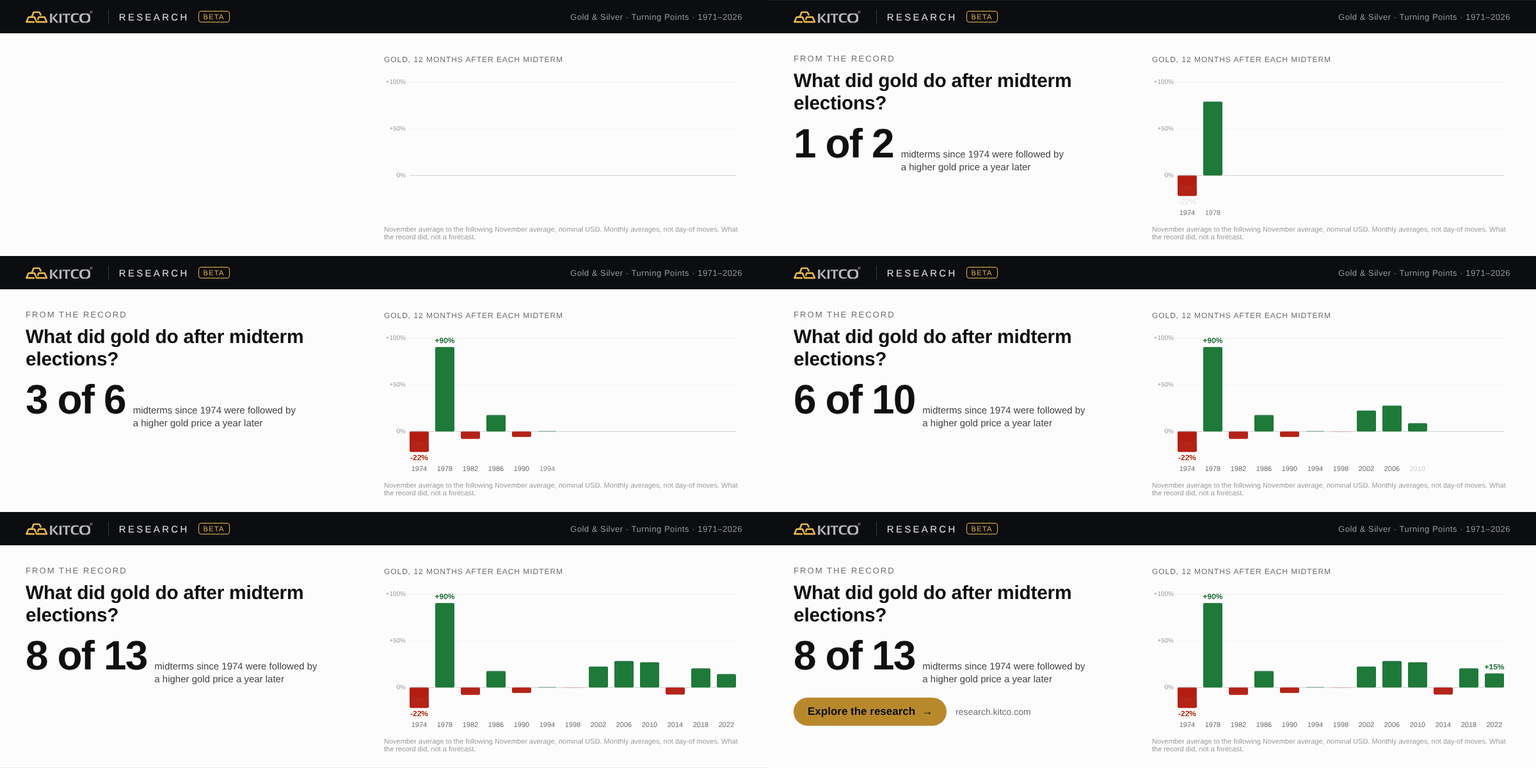
Dahdah noted that the U.S. dollar has strengthened by roughly 2% since the Democrats swept the November midterm elections, creating another significant headwind for gold.
However, monetary policy is not the only factor weighing on the precious metal. Natixis also sees growing signs that central bank gold purchases, which have been an important pillar of support for the market in recent years, are starting to slow.
Dahdah pointed to Poland's central bank, which has reached its 700-tonne gold reserve target.
“Even though the governor stated that he would be still open to further purchases, the general market sentiment is that most of the accumulation is behind us,” he said.
At the same time, Dahdah noted that Kazakhstan's central bank has announced plans to reduce gold's share of its foreign exchange reserves from 78% to 75% by the end of the year, a move that could result in the sale of approximately 52 tonnes of gold.
Along with slowing central bank demand, Dahdah said that the ongoing selloff in technology stocks, particularly in the artificial intelligence sector, could be contributing to gold's weakness.
He explained that during previous periods of significant equity market volatility, including the global financial crisis and the COVID-19 pandemic, investors sold gold to raise liquidity and cover margin calls.
Dahdah said that a stress test of his current forecasting model suggests gold prices could fall by more than $200 an ounce by January.
His updated scenario assumes that central bank gold demand declines by 25% from 2025 levels, physically backed gold exchange-traded funds experience monthly outflows of 20 tonnes, and physical bar demand falls by 10%.
The model also assumes that the U.S. dollar and 10-year Treasury yields remain near their current levels. (Kitco Global Index shows how much of today's gold move is the dollar versus the gold market itself.)
See live precious metals prices for gold, silver, platinum and palladium — in USD, CAD and 12 more currencies.