
(Kitco News) - Gold is stuck in neutral, holding support at $4,000 an ounce, and the market could remain under pressure as consumers continue to take advantage of elevated prices by selling their unwanted jewelry.
In an interview with Kitco News, Tobina Kahn, President of the House of Kahn Estate Jewelers, said that the sharp correction in gold prices has done little to slow the flow of unwanted jewelry into estate dealers, but the motivation behind those sales has changed dramatically from the frenzy seen at the peak of this year's rally.
She explained that the panic and opportunistic selling that accompanied gold's surge to nearly $5,600 an ounce in January has largely disappeared. Instead, today's market is being driven by practical financial decisions and shifting consumer tastes, particularly among younger generations who inherit jewelry they have no intention of wearing.
"Although gold prices are down, we have still been pretty busy," Kahn told Kitco News. "I think in January it was more like, 'I want to get in, I want to get in,' because people were worried at such a high price. Nobody knew what it was going to do."
The urgency at the start of the year has since given way to a more measured environment. She pointed out that the estate jewelry business is no longer being driven by fears that gold prices could suddenly collapse. Instead, many customers simply view unused jewelry as an asset that can be converted into cash for more productive purposes.
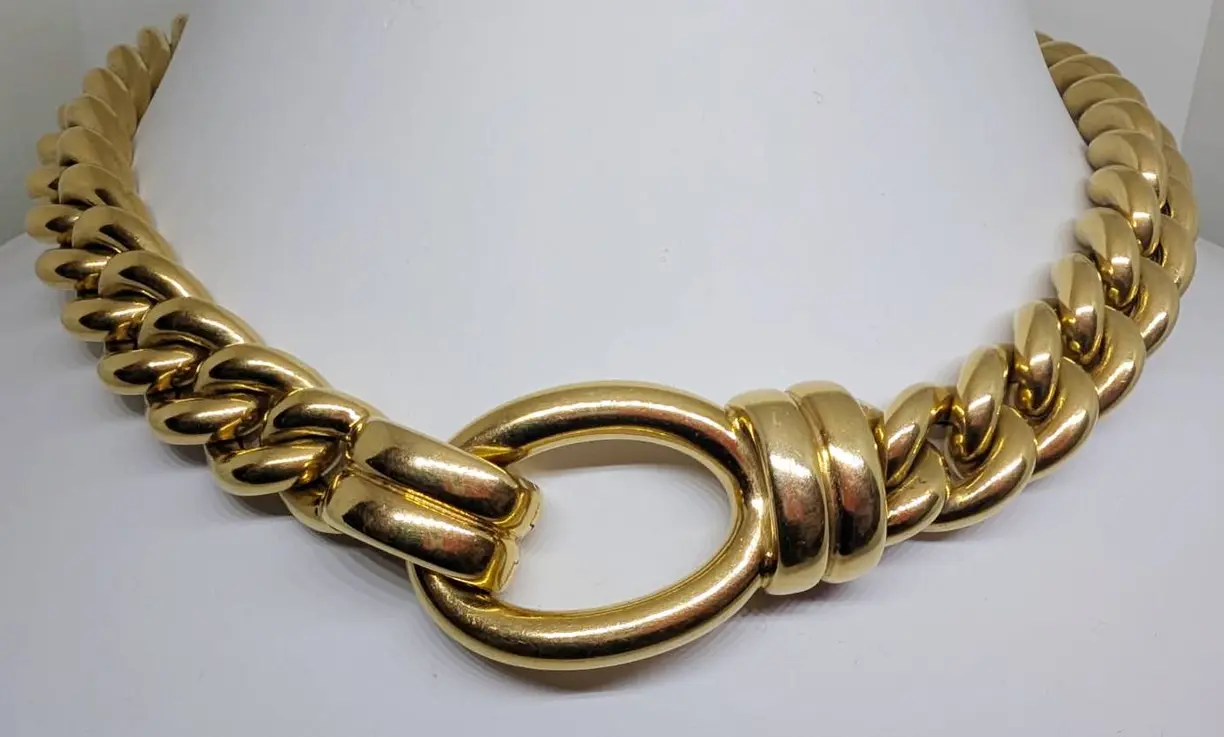
She noted that one customer received about $16,000 for an 18-inch, 18-carat heavy gold chain.
"It's sort of like, 'I need money. Let me look at what grandma gave me that I don't use anymore,'" she said. "Healthcare bills, the cost of living, college, a new car for a grandchild—people are putting the money to better use."
One of the biggest trends Kahn has noticed is a growing number of younger consumers bringing in inherited jewelry from their parents and grandparents.
"The older population is passing on. The kids or grandkids are inheriting this jewelry, these gold items; it’s not their style, it's not their taste," she said. "They're coming in to sell it to do something else with the money."
Rather than waiting for gold to revisit its record highs, these sellers are liquidating pieces that no longer fit modern fashion trends.
"We're seeing older pieces from the 1970s and 1980s," Kahn said. "We're seeing a lot of the heavy, bulky chains."
She added that heirs often keep a few sentimental items while selling the rest.
"If they inherited 10 pieces, they're usually selling six or seven that they don't want because no one in the family is ever going to wear them," she said.
Kahn noted that today's sellers are generally less concerned about where gold prices will trade next year than they are about whether the proceeds can improve their current financial situation.
"I don't think anybody was waiting for gold to go to $5,000 an ounce because nobody thought it would," she said. "They're looking at it mathematically: How much can I get for it, and can I put this money to better use?"
Although she believes gold could eventually climb back toward $5,000 an ounce, Kahn said waiting for another rally isn't always the best financial decision.
"It could go up, it could go down," she said. "But if you don't use it, what else can you be doing with the money?"
