
(Kitco News) - Central bank gold demand has provided critical support for gold, and according to some analysts, it is a key reason why prices have been able to hold support at $4,000 an ounce.
As demand picked up during the second quarter, there is no indication that the trend is reversing as more central banks join the buying.
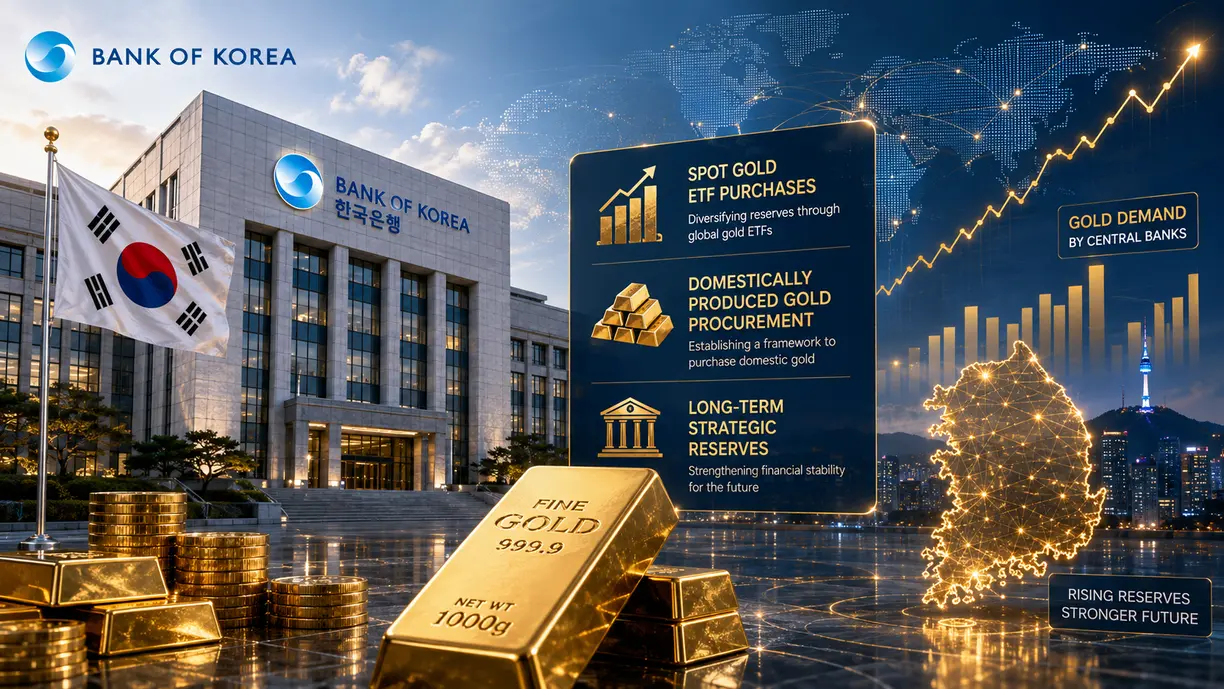
South Korea is the latest nation to announce an increase in its official reserves, buying gold for the first time since 2013. However, the Bank of Korea has taken a slightly different approach.
On Monday, Jeong Hee-sup, head of the Bank of Korea's Reserve Management Group, said that the central bank has started buying spot gold exchange-traded products.
Along with its ETF purchases, the central bank said it has also established a framework to purchase domestically produced gold in the near future.
"With geopolitical risks becoming a persistent feature of the global environment, interest in gold as a safe-haven asset has grown significantly among central banks," Jeong said.
Under the announced framework, the central bank will purchase domestically produced gold through a cooperative system involving the Korea Exchange, the Korea Securities Depository, and domestic gold producer LS MnM. Korea Zinc is also expected to supply eligible gold.
According to reports, LS MnM and Korea Zinc produce an estimated 4 to 5 metric tons of gold annually for export. The Bank of Korea plans to purchase part of that output when market and reserve management conditions are favorable.
Jeong also said that the central bank's gold purchases are part of a long-term strategy.
"We do not plan to make a large purchase all at once," Jeong said. "We intend to gradually increase the share of gold according to medium- and long-term needs."
Korea's gold purchases do not come as a huge surprise, as the central bank has been signaling its plans for several months.
“Given gold's role as an inflation hedge and its potential as an alternative to the U.S. dollar, it's evident that gold should be considered one of the viable assets from a medium- to long-term perspective,” Jeong said during a central bank panel discussion at the London Bullion Market Association’s annual precious metals conference.
