
(Kitco News) – Even if Friday morning’s employment report for September comes in above expectations, it won’t necessarily make the chances of a rate increase more likely, but it could add another layer of intrigue to the CPI release in two weeks, according to Christopher Hodge, Head Economist for the U.S. at Natixis.
Hodge wrote in Natixis’ nonfarm payrolls preview that he expects employment growth to slow from August’s torrid pace while still registering solid gains.
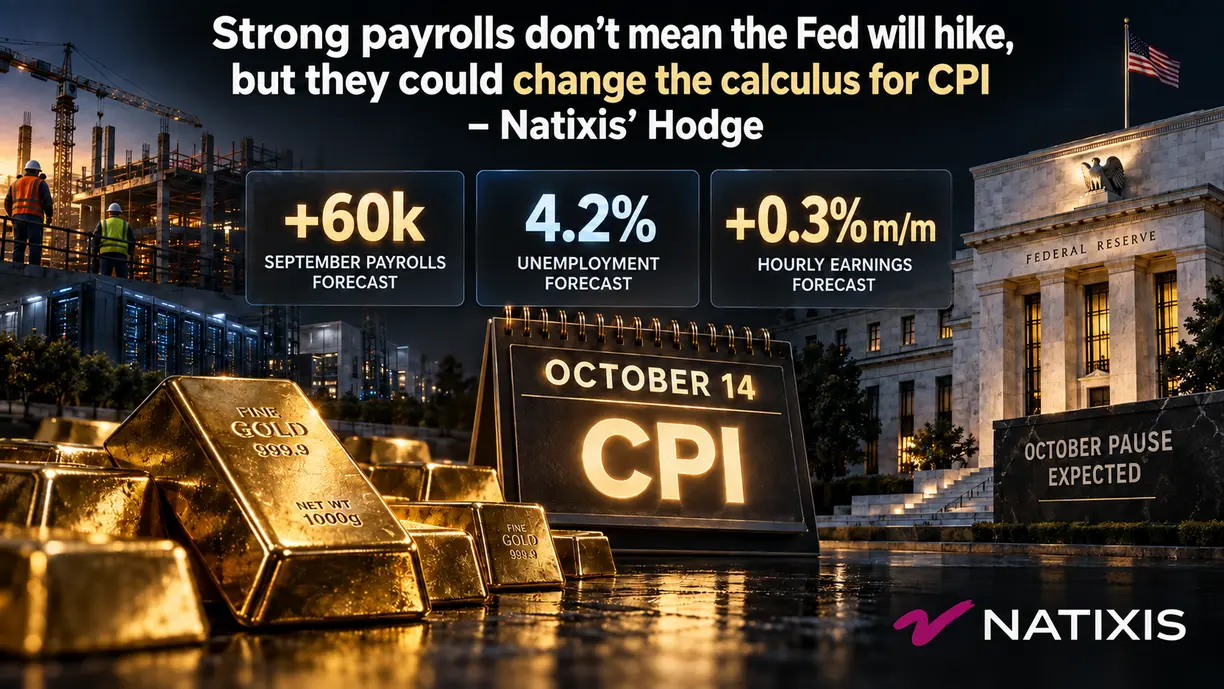
We expect payrolls to increase by 60k, which if realized, would bring the three-month moving average of gains to 81k,” he said. “Payrolls have been volatile this year, mostly surprising to the upside. We expect the very high job gains in leisure and hospitality and local government will come back down to earth, but that solid gains in manufacturing and construction on the back of the data center buildout will continue.”
Hodge said consumers’ pessimistic assessments of their job prospects suggest there is some underlying softness in the labor market. “This is evidenced by tepid wage gains and survey data suggesting that workers do not believe that jobs are ample,” he said. “Worker angst however has coincided with a slowdown in labor supply, keeping the unemployment rate remarkably stable in the past year. Higher participation helped the unemployment rate tick up by 5bps in August despite the blowout number for payrolls.”
“Should participation continue to normalize, as we expect it will, this should be accompanied by an increase in the unemployment rate to a rounded 4.2%.”
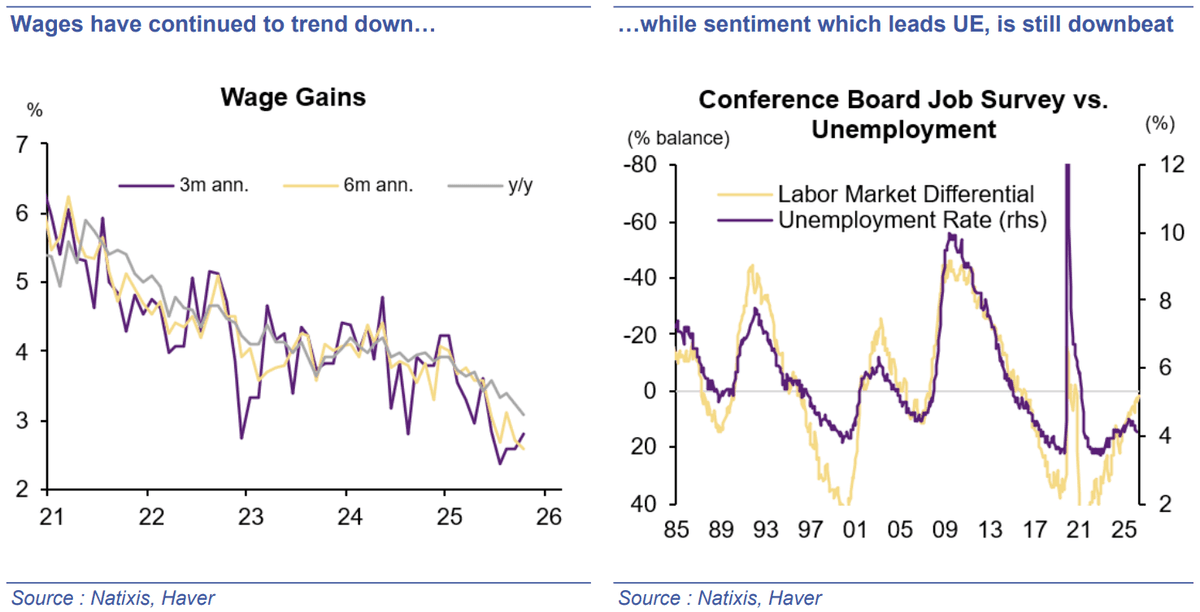
Natixis believes inflation is still overwhelmingly the Fed’s primary concern, and Hodge doesn’t expect Friday’s labor data to change that. “Labor market stability is now baked into the Fed’s calculus and, to be sure, an uptick in the unemployment rate is nothing to be overly concerned about,” he wrote. “Should the labor market begin to heat up and provide an inflationary impulse, that would surely be hawkish. Therefore, we will be watching the average hourly earnings data closely, but we expect another listless reading of about 0.3% m/m in September.”
The bottom line, Hodge said, is that a strong payrolls number doesn’t necessarily mean a more hawkish monetary policy stance. “Strong payrolls would need to be accompanied by higher participation, a stable unemployment rate, and higher wage gains,” he said. “Therefore, we do not think that Friday’s numbers will add pressure for an October hike.”
“Much weaker than expected data however, could lower the bar for what would be considered an acceptable CPI print on October 14,” he added.
Looking ahead to the October FOMC meeting, Hodge said he believes there is a genuine divide on the committee about the real trajectory of inflation. “Unless CPI is higher than expected and broad-based, we think the path of least resistance is to pause at the October meeting and reassess in December,” he said. “Adding to the argument for patience is the fact that mid-term elections will occur less than a week after the October meeting.”
“We don't think the Fed is politically compromised, but if it’s a toss-up about whether or not a hike is appropriate, avoiding a political backlash with a pause is likely the most prudent path.”
