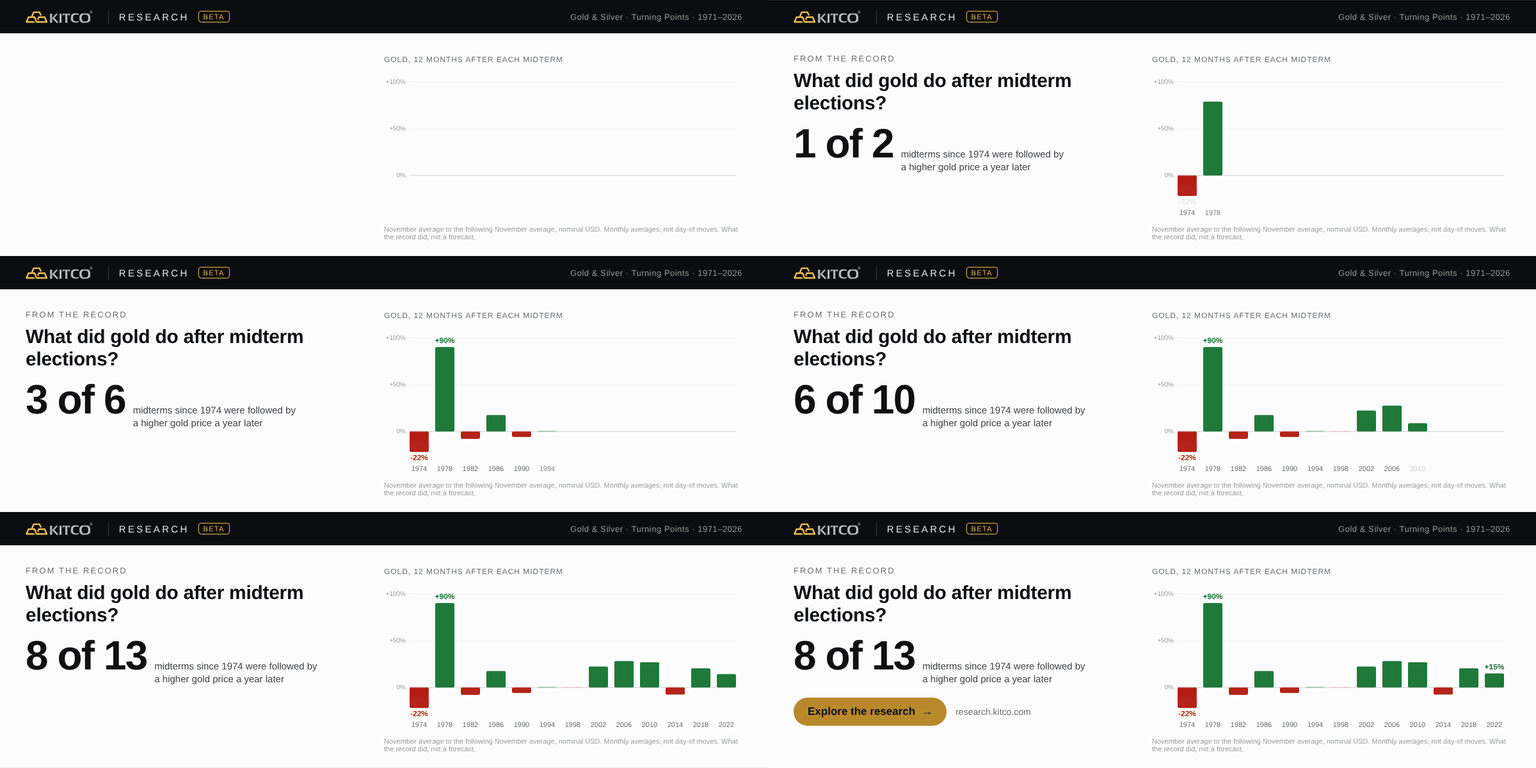
(Kitco News) - The Democratic Party's sweeping victory in the U.S. midterm elections has created some positive momentum in the gold market, but recent price action shows that political developments remain a secondary concern as the Federal Reserve's monetary policy continues to dominate investor sentiment.
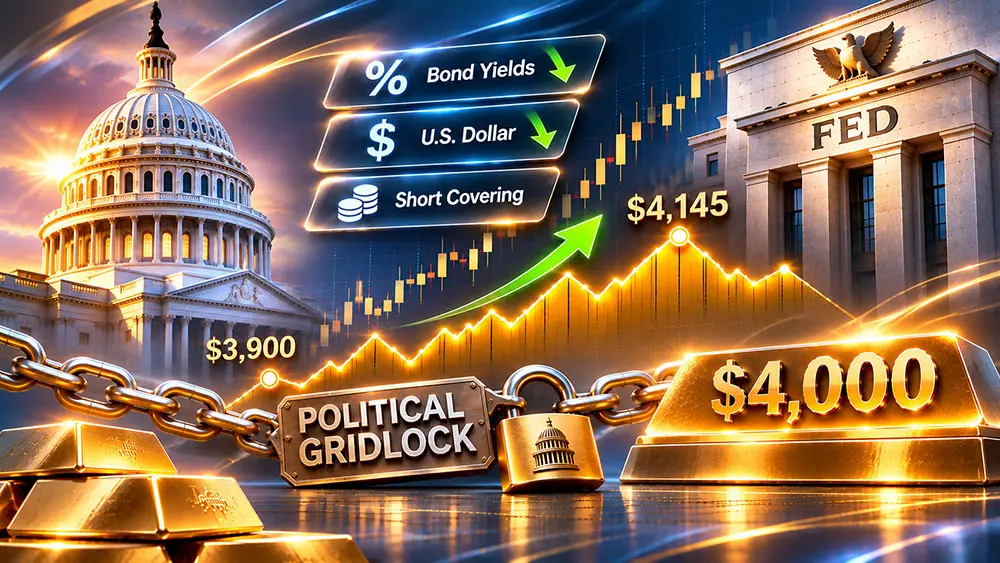
Although gold prices rallied sharply following the election, investors are once again watching critical support at $4,000 an ounce heading into the weekend.
Gold's rally, which pushed prices from around $3,900 an ounce after election day to a high of $4,145, appears to have been driven by falling bond yields, a weaker U.S. dollar and short covering following last week's sharp selloff.
However, stronger-than-expected U.S. employment data has reinforced expectations that the Federal Reserve will maintain its tightening bias as it continues to battle persistent inflation.
The latest economic data highlights the challenges facing gold, as higher interest rates and elevated bond yields increase the opportunity cost of holding the non-yielding precious metal.
While U.S. monetary policy remains the dominant driver for gold in the near term, this isn't necessarily a bad thing for long-term investors. As we have noted in recent weeks, many analysts continue to view lower prices as tactical buying opportunities, particularly as the fundamental factors supporting gold remain largely intact.
One key driver for gold in the last few months has been the evolving U.S. dollar debasement trade as the unsustainable rise in the debt has surpassed $40 trillion.
The Democratic takeover of Congress could create some interesting political dynamics, particularly as lawmakers gain greater control over federal spending in January.
Although political gridlock could limit President Donald Trump's ability to pursue his fiscal agenda, it remains questionable whether a Democratic-controlled Congress will significantly improve America's deteriorating fiscal position.
Politicians on both sides of the aisle have demonstrated little appetite for meaningful spending restraint. The priorities may change, but the underlying challenges of rising government debt and persistent deficits are unlikely to disappear.
At the same time, ongoing geopolitical uncertainty and the potential for renewed financial market volatility continue to support gold's long-term appeal as a portfolio diversifier.
Ultimately, the election results have changed the political landscape, but they have done little to alter the economic realities facing gold investors.
For now, the Federal Reserve remains firmly in the driver's seat, and gold could struggle to build sustainable bullish momentum until monetary policy expectations shift.
However, short-term weakness should not be confused with a deterioration in gold's long-term investment outlook, no matter who is in control of Capitol Hill.
See live precious metals prices for gold, silver, platinum and palladium — in USD, CAD and 12 more currencies.